Authentic Thai Green Curry from Scratch
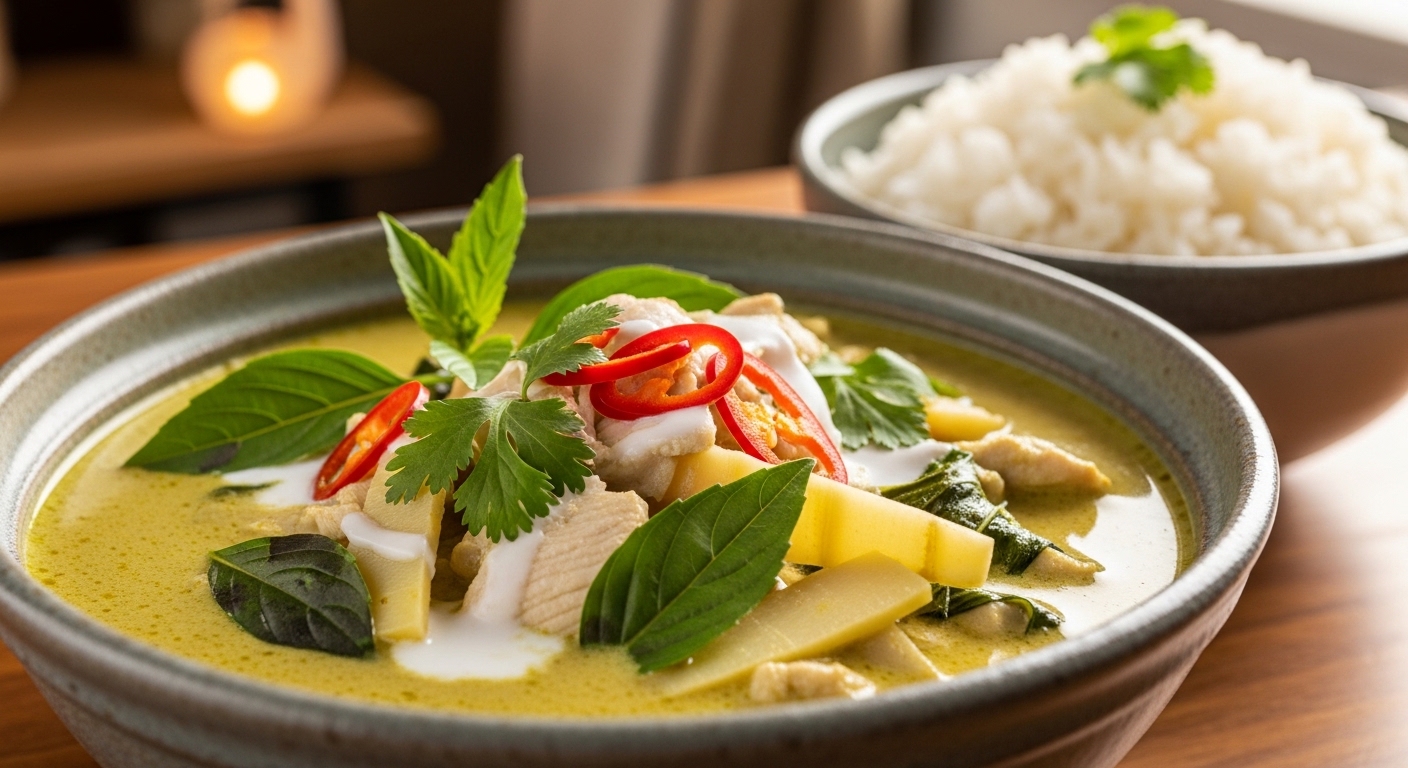
Thai green curry—known as “gaeng khiao wan” in Thai, which literally translates to “sweet green curry”—is one of those dishes that hits every corner of your palate at once. It’s rich and creamy from the coconut milk, fiery from the fresh green chilies, aromatic from the herbs, a little sweet, a little salty, and bright from the lime leaves. When it’s made well, all of these flavors exist in perfect balance, and that balance is what separates an okay green curry from one that makes you close your eyes and genuinely savor every bite.
Understanding the Curry Paste
The heart of any Thai curry is the paste. In Thailand, cooks make their curry paste fresh using a heavy stone mortar and pestle called a “krok,” pounding each ingredient individually before combining them. The paste for green curry typically includes fresh green chilies (usually Thai bird’s eye chilies or the larger green spur chilies), lemongrass, galangal, shallots, garlic, cilantro roots, kaffir lime zest, cumin seeds, coriander seeds, white peppercorns, and shrimp paste.
If you have the time and ingredients, making paste from scratch is a genuinely transformative experience—the flavor is brighter and more complex than anything from a jar. That said, a good store-bought paste gets you ninety percent of the way there with a fraction of the effort. Brands like Mae Ploy, Maesri, and Aroy-D are all solid choices. Just taste your paste first, because the heat levels vary significantly between brands. Start with two tablespoons and adjust upward.
The Coconut Milk Matters
This is one detail that makes a real difference, and it’s worth paying attention to. Always use full-fat coconut milk. Lite coconut milk produces a thin, watery curry that doesn’t have the luxurious body you’re looking for. When you open the can, you’ll often find a thick layer of cream sitting on top of thinner liquid below. Don’t shake the can—that thick cream is what you want to use first.
Scoop out the thick coconut cream from one can and use it as the cooking fat to fry the curry paste. This technique is fundamental in Thai cooking. As the cream heats up over medium-high heat, the fat separates from the water content, and the paste fries in that coconut fat. You’ll see the oil start to separate and float on the surface—Thai cooks call this “cracking” the coconut cream, and it’s the signal that your paste has been properly toasted and the flavors have bloomed.
How to Make It
-
Fry the paste: Heat a wok or large deep skillet over medium-high heat. Scoop the thick coconut cream from one can into the wok. Let it simmer until you see the oil separating—this takes about three to four minutes. Add the curry paste and stir-fry it vigorously in the cracked coconut cream for two minutes until it becomes incredibly fragrant and deepens in color.
-
Cook the chicken: Add the sliced chicken thighs to the wok and toss them in the paste until every piece is coated and the outside turns opaque, about three minutes. Chicken thighs are important here—they stay juicy and tender in the curry, whereas breast meat tends to turn dry and stringy.
-
Build the curry: Pour in the remaining coconut milk from both cans. Add the torn kaffir lime leaves, fish sauce, and palm sugar. Bring everything to a gentle simmer—never a rolling boil, which can cause the coconut milk to separate and turn grainy.
-
Add the vegetables: Add the eggplant and green beans first since they take a few minutes longer than the bell pepper and bamboo shoots. Let them simmer for about five minutes, then add the pepper and bamboo shoots. Cook for another three to four minutes until all the vegetables are tender but still have some bite to them. Overcooked vegetables in a curry are a missed opportunity—you want that textural contrast against the silky sauce.
-
Finish with basil: Kill the heat and stir in the fresh Thai basil leaves. They’ll wilt in the residual heat. Taste the curry and adjust the seasoning—it might need more fish sauce for saltiness, more sugar to balance the heat, or a squeeze of lime juice to brighten it up. These final adjustments are where good cooks become great ones.
Getting the Balance Right
Thai cooking is all about balancing four fundamental flavors: salty, sweet, sour, and spicy. In green curry, fish sauce provides the salt (and a deep umami backbone), palm sugar provides the sweetness, lime juice or kaffir lime leaves provide the sourness, and the chilies in the paste provide the heat. If your curry tastes flat or one-dimensional, it’s almost certainly because one of these elements is out of balance.
The most common mistake is under-seasoning. Fish sauce sounds intimidating if you’ve never cooked with it before—it smells strong on its own—but in the context of a curry, it doesn’t taste “fishy” at all. It just adds depth and savoriness. Don’t be shy with it. Add a tablespoon, taste, and add more if needed.
Tips for the Best Green Curry
- Don’t boil the coconut milk: Keep it at a gentle simmer. Boiling causes the fats and water in coconut milk to separate, leaving you with a grainy, oily texture instead of a smooth, creamy one.
- Thai basil vs. regular basil: Thai basil has a distinctly different flavor—it’s peppery, slightly anise-like, and holds its shape better in hot liquids. Italian basil isn’t a great substitute because it wilts too quickly and has a completely different flavor profile. If you can’t find Thai basil, try adding a small amount of fresh mint instead for that cooling contrast.
- Protein variations: Shrimp works beautifully here—add them in the last three minutes of cooking so they stay tender. Firm tofu, pan-fried until golden before adding, makes an excellent vegetarian option. Sliced pork tenderloin is another great alternative.
- Make it ahead: The curry tastes even better the next day, but add the basil fresh when reheating. The vegetables will be softer, so if that bothers you, cook fresh vegetables and add them during the reheat.
Serving Suggestions
Always serve green curry with jasmine rice. The fragrant, slightly sticky rice is the perfect foil for the rich, saucy curry. Cook your rice with slightly less water than usual so it’s a bit firmer—soggy rice gets lost in the sauce, while properly cooked rice provides a pleasant textural contrast.
For an extra touch, garnish with sliced fresh red chilies, a few extra basil leaves, and a drizzle of coconut cream on top. The red chilies add a pop of color against the green curry, and the drizzle of cream creates a beautiful visual contrast.
Thai-style cucumber relish—thinly sliced cucumbers in sweetened rice vinegar with shallots and a pinch of chili flakes—makes a refreshing side that cuts through the richness of the curry beautifully. If you enjoy bold Asian flavors, our Korean Bibimbap offers another exciting way to explore the region’s cuisine.
My Kitchen Notes
After making this curry dozens of times, I’ve learned that the paste is truly where the magic lives. I once tried using twice as much store-bought paste to save time, hoping for a more intense flavor, but it just tasted harsh and overly salty. The real depth comes from the coconut cream technique—taking the time to properly crack the cream and fry the paste for a full two minutes makes an extraordinary difference. The curry goes from tasting like something from a jar to tasting like something from a street market in Bangkok.
Another thing I discovered: the order in which you add vegetables matters more than you’d think. Adding the harder vegetables first gives them time to develop flavor without turning mushy, while the bell peppers and bamboo shoots stay crisp and vibrant if they go in last. I also find that fish sauce brands vary wildly in saltiness, so I always taste and adjust at the end rather than following a fixed measurement.
One final observation: this curry genuinely tastes better the next day. The coconut milk, herbs, and spices have time to marry overnight, producing a complexity that freshly made curry can’t quite match. Make a double batch and save yourself a night of cooking.
Common Mistakes to Avoid
- Boiling the coconut milk: This is the most common error. A rolling boil causes the coconut milk to separate and turn grainy. Always keep it at a gentle simmer.
- Using chicken breast instead of thighs: Breast meat dries out quickly in the simmering liquid. Thighs stay juicy and tender, which is essential for a curry that may be reheated.
- Overcooking the vegetables: Mushy vegetables are a missed opportunity. Add harder vegetables first and softer ones later so everything maintains some bite.
- Skipping the fish sauce: Fish sauce may smell strong on its own, but it provides the essential salty, umami backbone that makes the curry taste authentically Thai. Don’t substitute salt for it.
- Using dried basil instead of fresh: Dried basil has no place in Thai curry. Thai basil is essential for its peppery, slightly anise-like flavor. If unavailable, fresh mint is a decent alternative.
Storage & Meal Prep Tips
Green curry keeps well in the refrigerator for up to four days in an airtight container. Add the Thai basil fresh when reheating, as it wilts and darkens during storage.
For meal prep, portion the curry into individual containers with a side of jasmine rice for easy grab-and-go lunches throughout the week. The curry reheats gently on the stovetop over medium-low heat or in the microwave in two-minute intervals.
Freeze the curry (without basil or rice) for up to three months. Thaw overnight in the refrigerator and reheat gently. The vegetables will soften further, so if texture is important, cook fresh vegetables and add them during reheating.
For a quick weeknight meal, prep all your vegetables in advance and store them in separate containers. The actual cooking time is just twenty minutes once everything is prepped, making this an ideal busy-night dinner.
Frequently Asked Questions
Can I use regular basil instead of Thai basil? You can, but the flavor will be noticeably different. Thai basil is peppery and slightly anise-like, while Italian basil is sweeter and more delicate. Fresh mint is a better substitute if Thai basil is unavailable.
Is green curry spicy? The heat level depends on your curry paste. Start with two tablespoons and taste before adding more. Most store-bought pastes range from mild to medium. You can always add fresh chilies for extra heat at the table.
Can I make this vegetarian? Absolutely. Replace the chicken with firm tofu, pan-fried until golden, and swap the fish sauce for soy sauce or a vegetarian fish sauce. The curry will still have plenty of depth and flavor.
Why does my curry separate when reheating? Coconut milk can break slightly when reheated too quickly. Reheat gently over medium-low heat, stirring occasionally. If it does separate, a quick stir or whisk will usually bring it back together.
Can I use light coconut milk? You can, but the curry will be significantly thinner and less rich. Full-fat coconut milk is strongly recommended for the authentic, luxurious texture that makes green curry special.

About the Author
Makutu Bright
Software engineer, founder of Cracipes, and passionate home cook based in Kumasi, Ghana. BSc from KNUST, trained at AltSchool Africa. Combines food science research with real-world cooking experience to create reliable, well-tested recipes.
View All Recipes & Full Bio
Submission Received!
Your review is in the kitchen being moderated.