The Roman Secret: Authentic Spaghetti Carbonara
A Taste of Rome in Your Kitchen
There is a specific kind of magic that happens in a warm Italian kitchen as the sun begins to set. It’s the scent of savory, cured pork rendering in a pan and the rhythmic whisking of eggs and cheese. Spaghetti Carbonara is more than just a meal; it’s an experience of Roman tradition. Imagine glossy, sun-colored strands of pasta draped in a sauce so silky it looks like liquid gold, punctuated by the spicy bite of cracked black pepper and the salty crunch of golden pancetta. This is indulgence in its purest, most authentic form.
What makes Carbonara so special among Italian pasta dishes is what it doesn’t include. There is no cream. There are no onions. There is no garlic. The sauce is created entirely from eggs, hard cheese, and the rendered fat of cured pork. This minimalism is the essence of Roman cooking—a handful of perfect ingredients, handled with precision, producing something far greater than the sum of its parts.
The Mysterious Origins of Carbonara
The origins of Carbonara are surprisingly murky for such an iconic dish. The most popular theory suggests it was created during or shortly after World War II, when American GIs stationed in Italy had access to bacon and eggs through military rations. Italian cooks may have combined these ingredients with the local pasta traditions to create something new. Another theory ties the name to the Italian word “carbone,” meaning charcoal, suggesting it was a hearty meal favored by charcoal workers in the Apennine Mountains. A third explanation connects it to the Carbonari, a secret revolutionary society in 19th-century Italy. (Source: Riley, G. “The Oxford Companion to Italian Food,” Oxford University Press, 2007)
Regardless of its exact origin, Carbonara first appeared in Italian cookbooks in the 1950s and quickly became one of Rome’s signature dishes—part of the “Holy Trinity” of Roman pasta along with Cacio e Pepe and Amatriciana. Today, Romans take their Carbonara very seriously, and debates about the correct way to make it can become surprisingly heated. Cream is considered absolutely unacceptable by purists, and the choice between guanciale (cured pork jowl) and pancetta is a matter of fierce regional pride.
The Soul of Carbonara
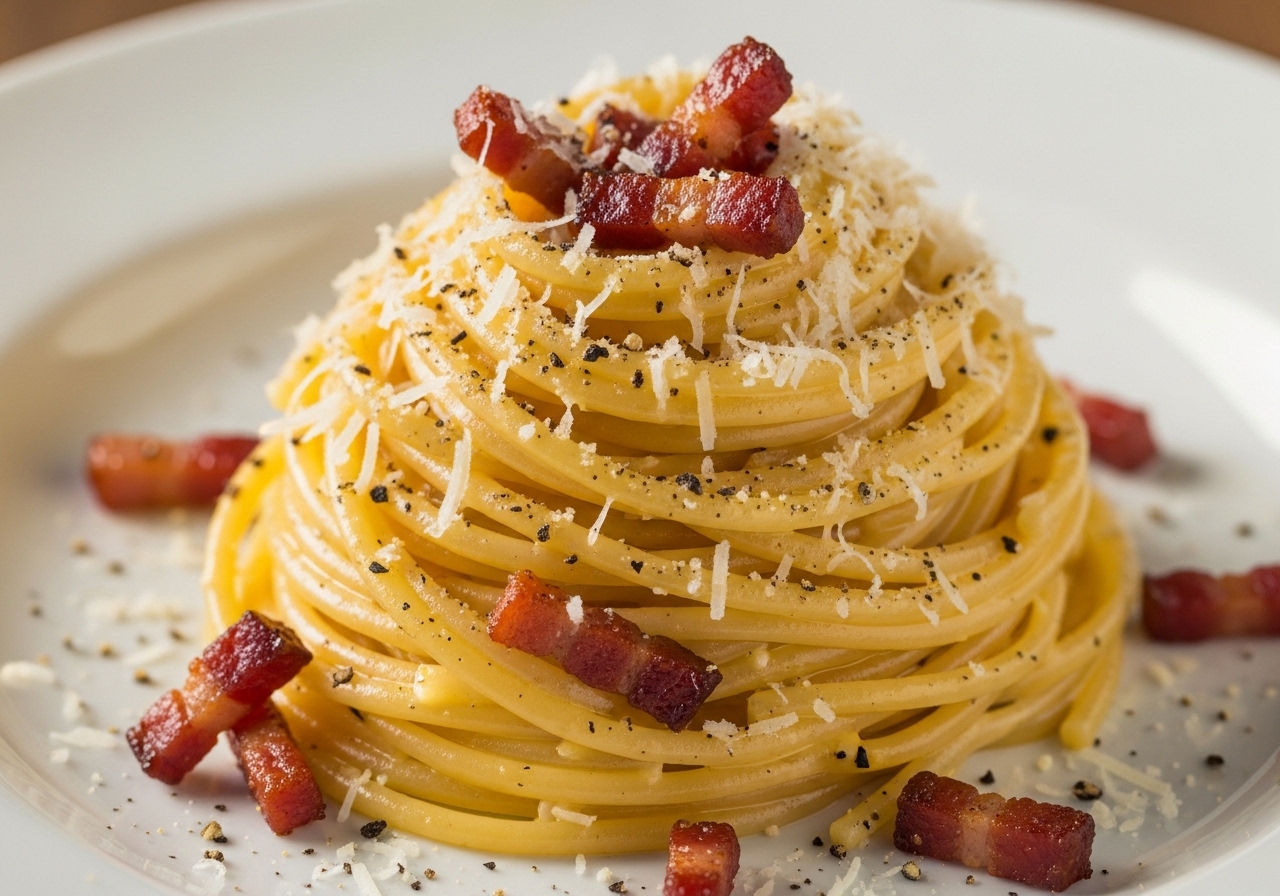
The beauty of Carbonara lies in its simplicity and the integrity of its core elements. At its heart are perfectly twirled nests of spaghetti, firm yet tender. These are coated not in a heavy cream, but in a delicate, velvety emulsion of fresh eggs and sharp, aged cheese. This emulsion is what separates a great Carbonara from a mediocre one—when done correctly, the residual heat of the pasta gently cooks the egg mixture into a smooth, glossy sauce that is neither scrambled nor runny, but suspended in a perfect, silky state between the two.
The dish is brought to life by morsels of pancetta—crisped until they are savory jewels that burst with flavor—and a generous dusting of coarsely cracked black pepper. The pepper is not an afterthought here; it is a primary flavor component, providing a warm, aromatic spiciness that is essential to the character of the dish. The result is a high-gloss finish that captures the light and promises a rich, savory bite every single time.
Understanding the Ingredients
Every ingredient in Carbonara earns its place, and substitutions change the character of the dish significantly:
-
Guanciale vs. Pancetta: Traditional Carbonara uses guanciale, which is cured pork jowl. It has a higher fat-to-meat ratio than pancetta and a more delicate, nuanced pork flavor. Pancetta, which comes from the pork belly, is more widely available and makes an excellent substitute. Both should be cut into small cubes or thick strips, never thin slices, so they render slowly and become crispy on the outside while remaining slightly chewy within.
-
Pecorino Romano: This is a hard, sharp sheep’s milk cheese that is saltier and more pungent than Parmesan. It is the traditional cheese for Carbonara and provides the characteristic tang that makes the dish distinctly Roman. If you mix it with some Parmigiano-Reggiano, you get a slightly milder, more complex sauce—not traditional, but delicious in its own right.
-
Eggs: The combination of whole eggs and extra yolks is critical. The yolks provide richness, color, and emulsifying power, while the whole egg adds structure. Some recipes use only yolks for an even richer, more golden sauce.
-
Black Pepper: Use a pepper mill and crack it coarsely. Pre-ground pepper from a can will not deliver the same aromatic intensity. For the most flavor, toast the cracked pepper briefly in the rendered fat before adding the pasta.
The Dance of the Sauce
Creating the perfect Carbonara is a dance of timing and temperature. It begins with the gentle sizzle of pancetta in a wide skillet, slowly releasing its oils until it turns a deep, tempting bronze. Meanwhile, the pasta swims in aggressively salted water—Italians say the water should taste like the sea—boiling until it reaches that elusive al dente snap.
While the pork renders and the pasta cooks, you prepare the sauce: eggs, yolks, and finely grated Pecorino whisked together in a bowl until smooth and slightly thick. This mixture is essentially a raw custard that will be cooked by nothing more than the heat of the pasta itself.
The real alchemy happens when the heat is reduced. The hot, drained pasta is tossed into the pan with the rendered fat and crispy pork, swirling through to capture every ounce of flavor. Then, with the pan OFF the heat—this is critical—the egg and cheese mixture is poured over the pasta. You toss vigorously and continuously, and the residual heat transforms the eggs into a smooth, pourable velvet that clings to every strand. If the pan is too hot, you get scrambled eggs. If it’s too cold, you get a raw, slimy coating. The sweet spot between these extremes is where Carbonara lives, and finding it is the entire art of the dish.
Adding a splash of starchy pasta water during this tossing process is essential. The starch acts as an emulsifier, helping the egg and cheese bind into a cohesive sauce rather than separating into oily cheese and cooked egg. Add it gradually, a tablespoon at a time, tossing constantly, until the sauce reaches a creamy, flowing consistency that coats the pasta evenly.
How to Make It
-
Boil the pasta: Bring a large pot of generously salted water to a rolling boil—it should taste like the sea. Cook the spaghetti until al dente, reserving about a cup of pasta water before draining. The starchy water is the key to creating a smooth, emulsified sauce.
-
Render the pork: While the pasta cooks, add the cubed pancetta or guanciale to a cold, wide skillet. Heat over medium heat, allowing the fat to render slowly as the pan warms up. Cook until the pork is deep golden and crispy on the outside, about eight to ten minutes. The rendered fat should pool in the pan—this is liquid flavor that will become the base of your sauce.
-
Make the egg mixture: In a separate bowl, whisk together the whole eggs, extra yolk, and finely grated Pecorino Romano until smooth and slightly thick. The mixture should fall off the whisk in a thick ribbon. Add a generous amount of coarsely cracked black pepper directly into the eggs.
-
Combine off heat: Remove the skillet from the heat completely—this step is critical. Add the hot, drained spaghetti to the pan with the rendered fat and crispy pork, tossing to coat every strand. Let the pan cool for about thirty seconds, then pour the egg mixture over the pasta while tossing vigorously and continuously. If the pan is too hot, the eggs will scramble. Add the reserved pasta water a tablespoon at a time, tossing constantly, until the sauce transforms into a smooth, creamy velvet that clings to every strand.
-
Finish and serve: Taste and adjust with more Pecorino and black pepper as needed. Serve immediately in warmed bowls, topped with extra grated cheese and a few reserved crispy pieces of pancetta for texture.
Why Carbonara Is Timeless
Why has this dish remained a global favorite for generations? Because it proves that you don’t need a pantry full of ingredients to create a masterpiece. It’s the ultimate “pantry meal” that tastes like it came from a five-star trattoria. It’s bold, it’s honest, and it’s incredibly rewarding to master. Whether it’s a quick solo dinner or a romantic date night, Carbonara always feels like an event—a celebration of simple things done perfectly.
There is also something deeply satisfying about mastering a dish that relies entirely on technique rather than complexity. Anyone can follow a thirty-ingredient recipe and produce something decent, but making five ingredients taste extraordinary requires understanding and skill. Once you nail the timing and temperature, you will have a dish in your repertoire that never fails to impress.
Tasteful Twists & Inspirations
While purists swear by the classic, Carbonara is a beautiful canvas for subtle, carefully chosen variations:
- The Pork Swap: While Guanciale is traditional and Pancetta is classic, try a smoked bacon for a deeper, woodsy aroma that fills the room. Just be aware that bacon is saltier than guanciale, so you may need to reduce the cheese slightly.
- Cheese Profiles: Mix Pecorino Romano with Parmigiano-Reggiano for a sauce that is slightly sweeter and more complex. Some cooks use a two-thirds Pecorino to one-third Parmesan ratio.
- A Touch of Green: For a pop of color, finish with a handful of micro-greens or a very fine chiffonade of parsley to contrast the warm gold tones of the sauce. Fresh peas are another classic Roman addition that pairs beautifully.
- Truffle Elegance: A tiny drizzle of truffle oil just before serving can elevate this humble dish into the realm of pure luxury. Use real truffle oil sparingly—a little goes a very long way.
- Mushroom Carbonara: Sauté sliced mushrooms alongside the pancetta for an earthier, more substantial version that is particularly satisfying in colder months.
Plating for Perfection
To make your Carbonara truly stunning, focus on the visual layers. Use a carving fork or tongs to create towering, elegant pasta twirls in a shallow, warm bowl. Warming the bowl is a small detail that makes a big difference—it keeps the sauce at the right temperature and prevents it from seizing up on a cold surface.
For the final touch:
- The Snowfall Effect: Grate extra Pecorino directly over the top from a height, creating a beautiful “snowfall” of white cheese over the glossy, golden pasta.
- Pepper Drama: Don’t hold back on the cracked pepper; those dark specks provide a stunning visual contrast to the golden sauce and are one of the three defining flavors of the dish.
- Crispy Pork on Top: Reserve a few pieces of the crispiest pancetta and place them on top of the plated pasta rather than mixing them in. They provide a visual focal point and a satisfying crunch in the first bite.
Every forkful is a reminder that the best things in life are simple, rich, and shared with love. If you’re building an Italian dinner menu, consider starting with a light Mushroom Risotto before the Carbonara for an impressive multi-course meal.
My Kitchen Notes
After years of making Carbonara, I’ve come to realize that the most important ingredient isn’t actually an ingredient at all—it’s confidence. The first few times I made this dish, I was so terrified of scrambling the eggs that I kept the heat too low and ended up with a raw, gluey coating instead of a silky sauce. Once I learned to trust the residual heat and toss vigorously without hesitation, everything changed.
I’ve also discovered that the type of pan matters more than I expected. A wide, heavy skillet retains heat more evenly than a thin one, which gives you better control over the temperature when you add the egg mixture. Stainless steel or cast iron works best—a nonstick pan can actually work against you because it prevents the fond from forming properly.
Another observation: freshly grated Pecorino makes a world of difference compared to pre-grated. The pre-grated stuff contains anti-caking agents that prevent it from melting smoothly into the eggs, resulting in a grainy sauce. Take the extra thirty seconds to grate it fresh, and you’ll taste the difference immediately.
Common Mistakes to Avoid
- Adding the eggs with the heat on: This is the single most common mistake. If the pan is too hot, the eggs scramble instantly. Always remove the pan from the heat completely before adding the egg mixture.
- Using cream: Authentic Carbonara contains no cream whatsoever. The silky texture comes entirely from the emulsion of eggs, cheese, and pasta water. Adding cream masks the delicate flavor of the egg sauce.
- Overcooking the pasta: The pasta should be al dente, as it will continue cooking when tossed in the pan. Pull it out a minute early and let it finish in the sauce.
- Skipping the pasta water: Without starchy pasta water, the sauce won’t emulsify properly. You’ll end up with greasy, separated puddles instead of a smooth, cohesive coating.
- Using pre-ground pepper: Pre-ground pepper has lost most of its aromatic oils. Crack it fresh from a mill for the warm, spicy bite that defines the dish.
Storage & Meal Prep Tips
Carbonara is best served immediately, but leftovers can be stored in an airtight container in the refrigerator for up to two days. Reheat gently in a skillet over low heat, adding a splash of water or a drizzle of olive oil to loosen the sauce. Microwave reheating tends to scramble the eggs further, so stovetop is strongly preferred.
For meal prep, you can prepare the egg and cheese mixture up to a day in advance and store it covered in the refrigerator. Cook the pasta and pork fresh, then combine everything when ready to serve.
The rendered pork fat can be strained and refrigerated for up to a week. Use it as a flavorful cooking fat for sautéing vegetables or frying eggs—it adds a wonderful savory depth to anything it touches.
If you’re cooking for a crowd, cook the pasta and pork separately in larger batches, then combine them off the heat with the egg mixture for a dramatic, tableside finish.
Frequently Asked Questions
Can I use regular Parmesan instead of Pecorino Romano? You can, but the flavor will be milder and less tangy. Pecorino Romano is saltier and more pungent, which is what gives Carbonara its distinctive Roman character. A mix of both cheeses works well and is a popular compromise.
Why did my sauce turn into scrambled eggs? The pan was too hot when you added the egg mixture. Always remove the pan from the heat and let it cool for thirty seconds before pouring in the eggs. Toss vigorously and continuously to distribute the heat evenly.
Can I make Carbonara ahead of time? Not really. Carbonara is a dish that must be assembled and served immediately. The egg sauce is created by the residual heat of the pasta and loses its silky texture as it cools. You can prep the components in advance, but the final assembly should happen right before serving.
What wine pairs well with Carbonara? A crisp, acidic Italian white like Frascati or a light Chianti works beautifully. The acidity cuts through the richness of the egg and pork fat. Avoid heavy, tannic reds that can overpower the delicate sauce.
Is guanciale really that different from pancetta? Yes. Guanciale has a higher fat-to-meat ratio and a more delicate, nuanced pork flavor. It renders more slowly and produces a silkier fat. Pancetta is a fine substitute if guanciale is unavailable, but purists insist on guanciale for the most authentic result.

About the Author
Makutu Bright
Software engineer, founder of Cracipes, and passionate home cook based in Kumasi, Ghana. BSc from KNUST, trained at AltSchool Africa. Combines food science research with real-world cooking experience to create reliable, well-tested recipes.
View All Recipes & Full Bio
Submission Received!
Your review is in the kitchen being moderated.