Perfect Creamy Mushroom Risotto
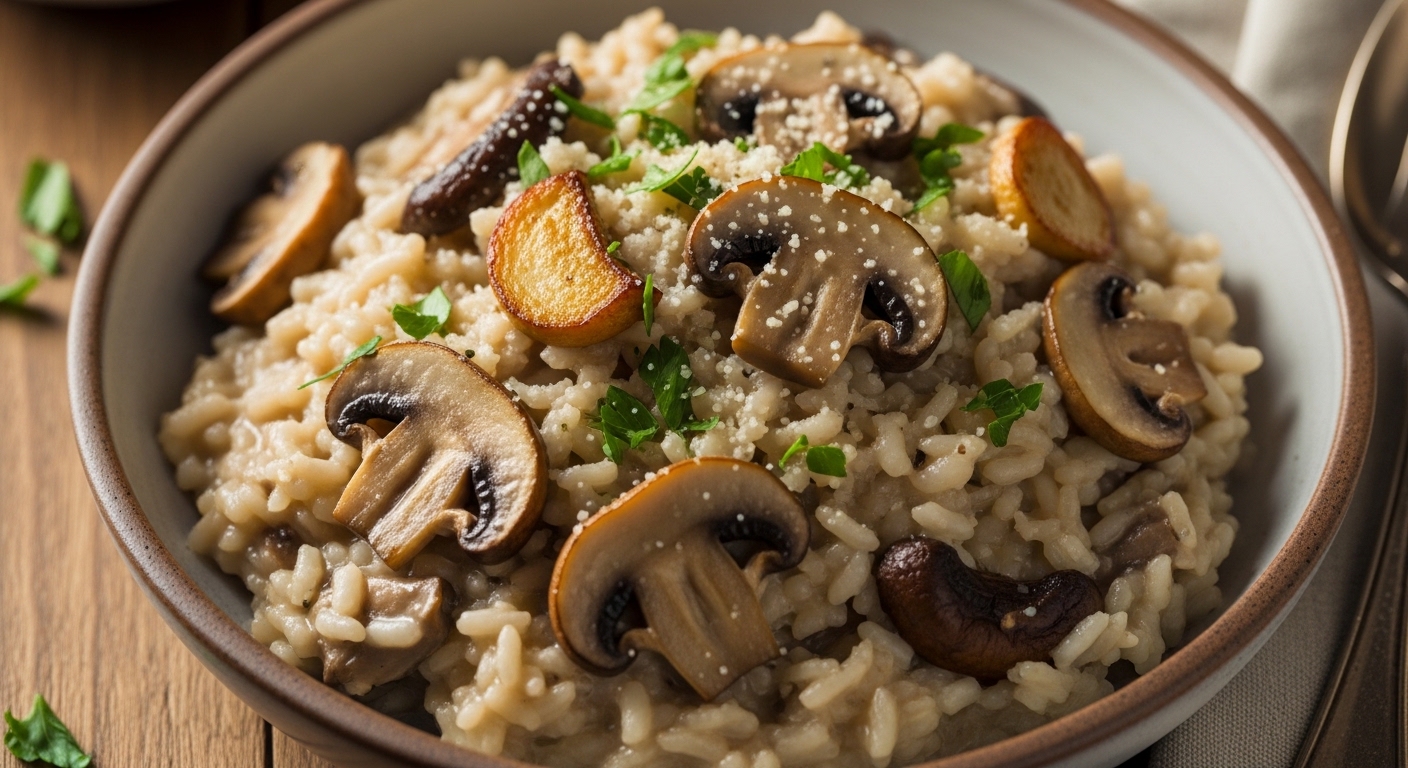
Risotto intimidates people, but the technique itself is actually very straightforward. If you enjoy hands-on cooking that rewards patience, you might also love our Homemade Pasta for another satisfying from-scratch project. You stir rice in broth until it becomes creamy. That’s the core of it. The mystique comes from the fact that it requires your full attention for about twenty-five minutes—you can’t walk away, you can’t multitask, you just have to stand at the stove and stir. In a world where we’re all used to setting timers and walking away, that level of focus can feel unusual. But there’s something genuinely meditative about it: slowly coaxing all that starch out of the rice and watching it transform from a pot of dry grains and thin broth into something impossibly creamy and luxurious.
Choosing the Right Rice
Not all rice is suitable for risotto. You need a short-grain Italian variety that’s high in amylopectin, the type of starch that dissolves into the cooking liquid to create that characteristic creaminess. The three main options are Arborio, Carnaroli, and Vialone Nano.
Arborio is the most widely available and works well for home cooking. It produces a very creamy risotto but can tip over into mushiness if you overcook it even slightly. Carnaroli is what most Italian chefs prefer—it has a larger grain, releases starch more gradually, and is much more forgiving of timing mistakes. It gives you a wider window between perfectly al dente and overcooked. Vialone Nano has a smaller, rounder grain and is traditional in the Veneto region for looser, more “wavy” (all’onda) style risottos. Any of these will give you excellent results.
The one thing you must never do is rinse risotto rice before cooking. That white starchy coating on the grains is exactly what creates the creamy consistency. Washing it away defeats the entire purpose.
The Power of Dried Porcini
Using a blend of fresh and dried mushrooms gives you the best of both worlds. The fresh mushrooms (cremini, shiitake, oyster—whatever combination looks best at your market) provide texture and visual appeal. The dried porcini provide a concentrated, intensely savory mushroom essence that fresh mushrooms simply can’t match.
Rehydrate the dried porcini by soaking them in one cup of hot water for at least twenty minutes. The mushrooms themselves get chopped and added to the risotto, but the real treasure is the soaking liquid. It’s essentially concentrated mushroom stock, and it adds an incredible depth of umami flavor. Strain it through a fine-mesh sieve or a coffee filter to remove any grit before using it—dried porcini often carry bits of sand and forest debris.
Making the Perfect Risotto
-
Prepare the mushrooms: Soak the dried porcini in hot water. Meanwhile, slice the fresh mushrooms. Heat one tablespoon of butter and one tablespoon of olive oil in a large skillet over high heat. Add the fresh mushrooms in a single layer—don’t stir them for the first two minutes so they develop a golden sear. Season with salt and thyme, and cook for about five to six minutes total until golden and deeply savory. Set aside.
-
Build the base: In a wide, heavy-bottomed pan or Dutch oven, heat the remaining butter and olive oil over medium heat. Add the diced onion and cook gently for about six minutes until soft and translucent—you don’t want any color on the onion because browning would change the flavor profile of the finished risotto. Add the garlic and cook for another minute. Add the rehydrated porcini mushrooms (chopped) and stir for thirty seconds.
-
Toast the rice: Add the dry Arborio rice to the pan and stir it into the onion mixture for about two minutes. Each grain should be coated in fat and slightly translucent around the edges with a white center—this is called the “tostatura” step, and it creates a slight seal on the outside of each grain that helps it maintain its shape and bite throughout the cooking process.
-
Add the wine: Pour in the white wine. It will sizzle dramatically. Stir continuously until the wine is almost completely absorbed—this takes about two minutes. The alcohol cooks off, leaving behind a subtle acidity that brightens the finished dish and prevents the risotto from tasting flat or one-dimensional.
-
The ladling process: This is the heart of risotto-making. Add the strained porcini soaking liquid first, stirring until absorbed. Then begin adding the warm stock one ladleful at a time (about three-quarters of a cup), stirring frequently and waiting until each addition is mostly absorbed before adding the next. The stock must be warm—adding cold stock drops the temperature and disrupts the starch release.
The stirring isn’t optional. Each stir agitates the surface of the rice grains, gradually releasing amylopectin starch into the liquid, which is what creates the creamy consistency. You don’t need to stir aggressively or constantly without pause—steady, frequent stirring with brief rests is fine. The whole process takes about eighteen to twenty minutes.
-
Test for doneness: Bite into a grain of rice. It should be tender but with a slight firmness at the very center—what the Italians call “al’onda,” meaning it flows like a wave when you tilt the pan. If the center still feels chalky or hard, keep going with more stock. If the rice is tender all the way through, you’ve gone slightly too far, but it’s still delicious.
-
The mantecatura: This is the final step that separates good risotto from transcendent risotto. Remove the pan from the heat, add the grated Parmesan and a final knob of cold butter, and stir vigorously for about a minute. The cold butter emulsifies into the hot risotto, and along with the Parmesan, creates an incredibly creamy, glossy finish. Fold in the seared mushrooms, add a drizzle of truffle oil if using, and adjust the seasoning.
Tips for Success
- Keep the stock warm: This is the most important practical tip. A pot of stock should be simmering on a back burner throughout the cooking process. Cold stock makes the risotto seize up.
- The right consistency: Perfect risotto should flow slowly when you spoon it onto a plate, settling into a creamy pool rather than sitting in a rigid mound. If it’s too thick, stir in a splash more hot stock before serving. It will continue to thicken as it sits, so err on the side of slightly loose.
- Season at the end: The Parmesan adds significant saltiness, so hold off on heavy salting until after the mantecatura step. You can always add more—you can’t take it away.
- Serve immediately: Risotto waits for no one. It continues to absorb liquid and thicken as it sits, so get it on plates and to the table while it’s still flowing. Have your guests seated before you start the mantecatura.
Elegant Serving Suggestions
Serve the risotto in warmed shallow bowls—cold plates will cause it to set too quickly. A few extra shavings of Parmesan on top, a scattering of fresh thyme leaves, and a final drizzle of good olive oil make it look restaurant-worthy. A simple arugula salad dressed with lemon juice and olive oil on the side provides a peppery, bitter contrast that cuts through the richness beautifully.
For a special occasion, a seared scallop placed on top of the risotto takes the whole dish to another level entirely. The sweetness of the scallop plays off the earthy mushrooms in a way that’s genuinely stunning.
Looking for more cozy comfort food? Try our Creamy Tomato Basil Soup for a perfect starter before risotto night, or pair this dish with our Garlic Butter Naan for mopping up every last bit of creamy sauce.
My Kitchen Notes
The first time I made risotto, I treated it like regular rice and walked away to check my phone. The bottom burned, the rice was crunchy in some spots and mushy in others, and I nearly wrote off risotto entirely. The second time, I committed to standing at the stove and stirring, and the result was revelatory—creamy, flowing, with each grain still having a pleasant bite. The lesson: risotto demands your attention, and it rewards you generously for giving it.
I discovered that keeping the stock warm on a back burner is genuinely the most important practical tip. The first time I ladled cold stock into the rice, the temperature dropped so dramatically that the cooking process essentially stalled. The rice took much longer to cook and the texture was uneven. A pot of gently simmering stock next to your risotto pan makes the whole process smoother and faster.
Another thing I learned: don’t fight the porcini soaking liquid. It looks murky and has grit at the bottom, but straining it through a fine-mesh sieve or coffee filter gives you the most concentrated, umami-rich liquid you can imagine. I skipped straining once and ended up with sandy grit throughout the risotto. Thirty seconds of straining saves the entire dish.
The mantecatura step—stirring in cold butter and Parmesan off the heat—transformed my risotto from good to extraordinary. The first time I skipped it, the risotto was pleasant but flat. The second time I stirred in that final knob of cold butter, the texture became impossibly glossy and creamy, like something from a high-end restaurant.
Common Mistakes to Avoid
- Rinsing the rice: Never rinse risotto rice. The starchy coating on the grains is what creates the creamy consistency. Washing it away defeats the entire purpose of the technique.
- Using cold stock: Adding cold stock to the rice drops the temperature and disrupts starch release. Always keep your stock warm on a back burner and ladle it in gradually.
- Overstirring or understirring: You don’t need to stir constantly without pause, but you also can’t walk away for five minutes. Steady, frequent stirring with brief rests allows the starch to release gradually and evenly.
- Overcooking the rice: Risotto should be tender with a slight firmness at the center—al dente. If the rice is completely soft throughout, you’ve gone too far and the texture will be mushy rather than flowing.
- Letting it sit before serving: Risotto thickens as it sits. Have your plates warmed and your guests seated before you start the mantecatura, and serve immediately.
Storage & Meal Prep Tips
- Refrigerator: Store leftover risotto in an airtight container for up to 3 days. It will thicken considerably as it cools—that’s normal.
- Reheating: Reheat on the stovetop over medium-low heat, adding a splash of warm stock or water and stirring until it loosens back to a creamy consistency. The microwave works in a pinch, but stovetop reheating produces much better texture.
- Freezing: Risotto freezes reasonably well for up to 1 month. Thaw in the refrigerator overnight, then reheat with added stock. The texture may be slightly less al dente but it’s still delicious.
- Make-ahead (partially): You can prep the mushrooms, measure the stock, and grate the Parmesan in advance. However, risotto itself should be made fresh—there’s no way to pause the process once you start ladling in stock.
- Risotto cakes (leftover hack): Spread leftover risotto on a sheet pan to cool, then refrigerate until firm. Form into patties, coat in breadcrumbs, and pan-fry until crispy on the outside. They make an excellent next-day lunch.
Frequently Asked Questions
What is the difference between Arborio and Carnaroli rice?
Arborio is the most widely available risotto rice and works well for home cooking. It produces a very creamy risotto but can become mushy if slightly overcooked. Carnaroli is what most Italian chefs prefer—it has a larger grain, releases starch more gradually, and is much more forgiving of timing mistakes, giving you a wider window between perfectly al dente and overcooked. If you can find Carnaroli, it’s worth the extra cost for a more foolproof result.
Can I use regular long-grain rice for risotto?
No. Long-grain rice like jasmine or basmati is low in amylopectin starch, which is the starch that dissolves into the cooking liquid to create risotto’s signature creaminess. Using long-grain rice will give you something closer to a pilaf—grains that are separate and fluffy rather than bound in a creamy sauce. Stick with Arborio, Carnaroli, or Vialone Nano.
Why is my risotto gluey instead of creamy?
Gluey risotto usually means the rice was overcooked or over-stirred. When rice is cooked past al dente, the starches break down further and create a pasty, sticky texture rather than the flowing creaminess you want. It can also happen if you add too much stock at once—each addition should be mostly absorbed before the next ladleful goes in.
Can I make risotto in advance?
Risotto is best served immediately after making. It continues to absorb liquid and thicken as it sits, so even a ten-minute delay changes the texture. If you need to prep for a dinner party, measure and prep all your ingredients in advance, but don’t start cooking until your guests are seated and ready to eat.
Do I have to use wine in risotto?
The wine adds a subtle acidity that brightens the finished dish and prevents it from tasting flat. If you prefer to skip it, you can substitute with a splash of white wine vinegar diluted in a few tablespoons of warm stock, or simply add an extra ladle of stock and a small squeeze of lemon juice at the end for brightness.

About the Author
Makutu Bright
Software engineer, founder of Cracipes, and passionate home cook based in Kumasi, Ghana. BSc from KNUST, trained at AltSchool Africa. Combines food science research with real-world cooking experience to create reliable, well-tested recipes.
View All Recipes & Full Bio

Submission Received!
Your review is in the kitchen being moderated.