Mediterranean Stuffed Bell Peppers
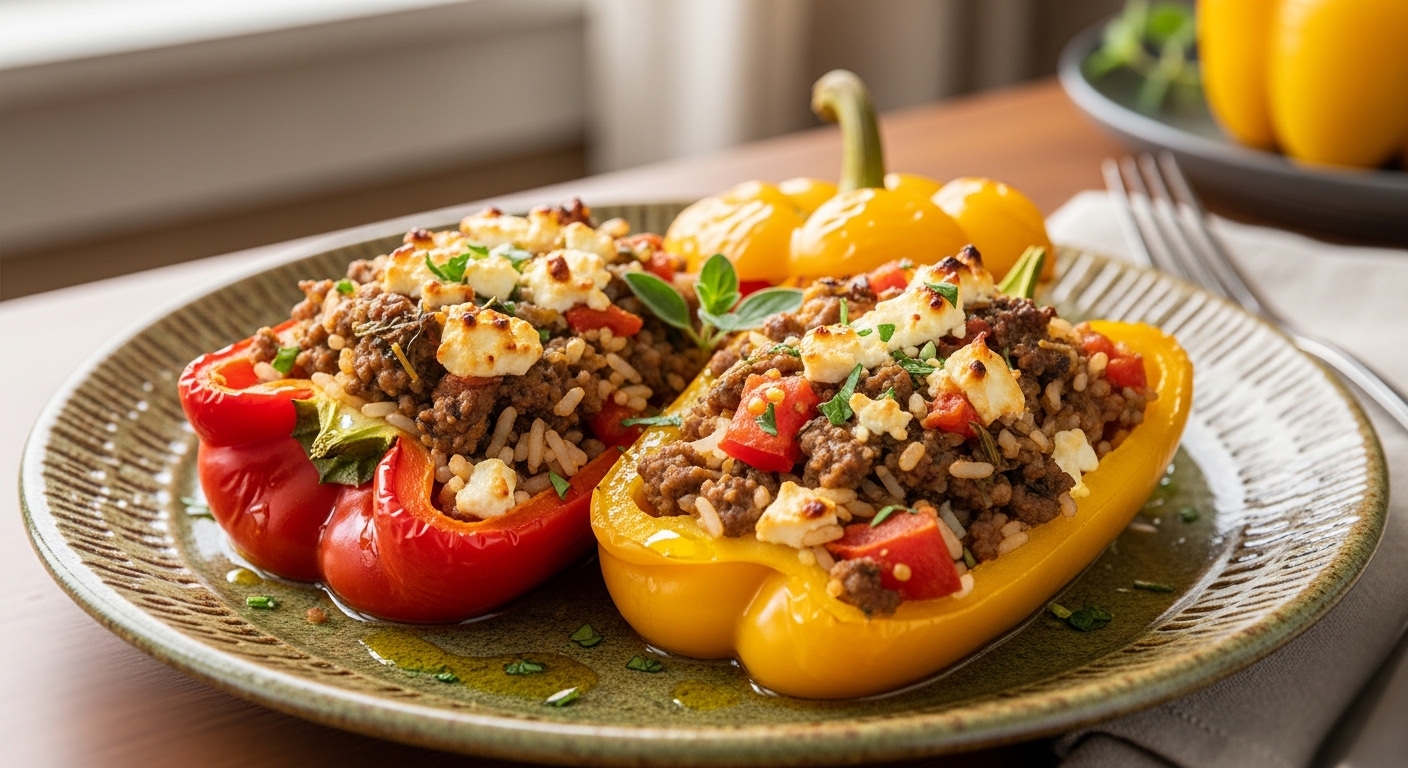
Stuffed peppers are one of those universally loved dishes that exist in some form in nearly every cuisine that has access to peppers. For another Mediterranean-inspired dinner, try our Greek Lemon Chicken alongside these peppers. You’ll find versions across the Mediterranean, Eastern Europe, Latin America, and the Middle East—each culture putting its own spin on the basic concept of hollowing out a pepper and filling it with something delicious. This particular version draws from Mediterranean flavors: savory ground beef mixed with fluffy rice, briny olives, crumbled feta, and fresh herbs, all baked inside sweet bell peppers until everything is tender and the cheese on top forms a bubbling, golden crust.
Choosing the Right Peppers
The pepper you use matters more than you might think. A mix of red, yellow, and orange bell peppers works best for this dish. The visual impact of a baking dish filled with peppers in different colors is genuinely stunning—it makes the dish look like something from a food magazine. But beyond aesthetics, the color affects the flavor. Green bell peppers are the least ripe and have a sharper, slightly bitter taste that some people find too assertive when baked. Red, yellow, and orange peppers are fully ripened and noticeably sweeter, which complements the savory filling beautifully.
Choose peppers that are large, firm, and have a relatively flat bottom so they stand upright in the baking dish without toppling over. If your peppers are lopsided, you can slice a thin piece off the bottom to create a flat surface—just be careful not to cut all the way through and create a hole.
To prepare the peppers, cut the tops off about half an inch down and remove the seeds and white membrane from inside. Lightly score the inside walls with a knife—this helps the filling adhere to the pepper. Blanch the hollowed peppers in boiling salted water for about three minutes to give them a head start on cooking. This step isn’t strictly necessary, but it ensures the peppers are perfectly tender by the time the filling is cooked through, without having to bake them so long that they collapse.
Making the Filling
-
Brown the meat: Heat the olive oil in a large skillet over medium-high heat and add the ground beef, breaking it up with a wooden spoon as it cooks. Season with salt, pepper, cumin, and smoked paprika. Cook until the meat is well-browned and no pink remains—about eight minutes. Don’t drain the fat unless it’s excessive; a small amount of fat carries flavor into the filling.
-
Build the aromatics: Add the diced onion to the browned meat and cook for about five minutes until softened and translucent. Add the garlic and cook for one more minute. Stir in the diced tomatoes (with their juices) and oregano. Let this simmer for about five minutes until the mixture thickens slightly and the flavors start to meld together.
-
Combine the filling: Remove the skillet from the heat and fold in the cooked rice, chopped olives, and crumbled feta cheese. The residual heat will start to soften the feta slightly, which creates these incredible pockets of creamy, tangy cheese throughout the filling. Taste and adjust the seasoning—the feta and olives both contribute saltiness, so you might need less salt than you’d expect.
Assembly and Baking
Spread a thin layer of tomato sauce on the bottom of a baking dish—this prevents the peppers from sticking and creates a flavorful sauce that pools around the bottom as everything bakes. Stand the blanched peppers upright in the dish and fill each one generously with the meat and rice mixture, packing it in firmly and mounding it slightly on top.
Pour the remaining tomato sauce over and around the peppers. Cover the dish tightly with aluminum foil and bake at 375°F (190°C) for about thirty minutes. The foil traps steam, which cooks the peppers evenly and keeps the filling moist. Remove the foil, top each pepper with a generous pile of shredded mozzarella, and return to the oven uncovered for another fifteen minutes until the cheese is melted, bubbling, and just starting to turn golden brown in spots.
Let the stuffed peppers rest for about five minutes before serving. This allows the filling to set slightly so it doesn’t spill out the moment you cut into the pepper. The juices from the tomato sauce and melted cheese will pool around the base of each pepper—make sure to spoon some of that over the top when you plate them.
Variations Worth Trying
- Vegetarian version: Replace the ground beef with a mixture of cooked lentils, chickpeas, and diced mushrooms. Season the same way—the earthy lentils and meaty mushrooms provide satisfying substance and protein.
- Greek-style: Use ground lamb instead of beef, add a tablespoon of fresh mint, increase the feta, and serve with a dollop of tzatziki on top.
- Mexican-inspired: Use ground turkey, swap the Mediterranean spices for chili powder and cumin, add black beans and corn to the filling, and top with pepper Jack cheese and a drizzle of salsa verde.
- Rice alternatives: Quinoa, cauliflower rice, or even couscous work beautifully in place of regular rice. Quinoa adds protein and a pleasant nutty flavor; cauliflower rice keeps things lower in carbohydrates.
Tips for Perfect Stuffed Peppers
- Pre-cook the rice: The rice should be fully cooked before it goes into the filling. Uncooked rice won’t have enough time or moisture to cook properly inside the pepper and will end up crunchy or chalky.
- Don’t over-stuff: Leave about a quarter inch of space at the top so the filling has room to expand slightly during baking and the cheese has something to sit on top of.
- Make ahead: Assemble the stuffed peppers up to a day in advance, cover, and refrigerate. Add about ten extra minutes to the covered baking time to account for the cold start.
- Leftover filling: Any extra filling makes an excellent base for a quick burrito bowl or can be served over pasta with extra tomato sauce.
Serving Suggestions
A simple side salad of mixed greens with a lemon vinaigrette is all you need alongside these peppers—the dish itself is self-contained and satisfying. Crusty bread for mopping up the tomato sauce from the bottom of the baking dish is highly recommended. For a heartier meal, serve alongside roasted potatoes or a grain salad with herbs and lemon.
For more Mediterranean-inspired dishes, check out our Greek Lemon Chicken for a complementary main, or try our Mediterranean Quinoa Salad as a fresh side that pairs perfectly with the stuffed peppers.
My Kitchen Notes
I used to skip blanching the peppers because it felt like an unnecessary extra step. The first time I baked them raw, they came out slightly crunchy in spots where the filling was already fully cooked and the cheese was golden. Blanching for just three minutes solved that problem completely—every bite was uniformly tender without the peppers turning mushy.
The feta cheese in the filling is a game-changer that I didn’t appreciate until I actually tried it. As the peppers bake, the feta softens into these creamy, tangy pockets throughout the filling that contrast beautifully with the savory meat and rice. It’s the kind of detail that makes people ask what your secret ingredient is.
I learned the hard way that green bell peppers are not ideal for this dish. Their bitter, sharp flavor doesn’t mellow enough during baking and clashes with the Mediterranean spices. Red, yellow, or orange peppers are sweeter and more forgiving—they complement the filling rather than competing with it.
One tip that changed my stuffed pepper game: spreading tomato sauce on the bottom of the baking dish. It prevents sticking, but more importantly, it creates a flavorful sauce that pools around the base of each pepper. Spooning that sauce over the top when plating adds moisture and a burst of tomato flavor to every bite.
Common Mistakes to Avoid
- Using raw rice in the filling: Uncooked rice will not have enough time or moisture to cook properly inside the pepper and will end up crunchy or chalky. Always use fully cooked rice before mixing it into the filling.
- Skipping the blanching step: While optional, blanching the hollowed peppers for three minutes ensures they are perfectly tender by the time the filling is done. Without it, you may end up with undercooked pepper walls.
- Overstuffing the peppers: Leave about a quarter inch of space at the top so the filling has room to expand slightly during baking and the cheese has a surface to sit on. Overstuffing causes the filling to spill out and creates a mess.
- Using green bell peppers: Green peppers are less ripe and have a sharper, more bitter taste that doesn’t complement the Mediterranean flavors as well as red, yellow, or orange varieties.
- Not resting before serving: Cutting into the peppers immediately after pulling them from the oven causes the filling to spill out in a stream of hot liquid. Resting for five minutes lets the juices settle and the filling firm up slightly.
Storage & Meal Prep Tips
- Refrigerator: Store leftover stuffed peppers in an airtight container for up to 4 days. They reheat beautifully in the oven at 350 degrees for about 15 minutes, or in the microwave for a quicker option.
- Freezer: Wrap individual stuffed peppers tightly in plastic wrap, then aluminum foil, and freeze for up to 3 months. Thaw overnight in the refrigerator before reheating. The peppers hold their shape well after freezing.
- Make-ahead (assembled raw): You can fully assemble the stuffed peppers up to a day in advance, cover, and refrigerate. Add about 10 extra minutes to the covered baking time since they’ll be starting cold.
- Leftover filling: Any extra filling makes an excellent base for a quick burrito bowl, stuffed into pita pockets, or served over pasta with extra tomato sauce.
- Meal prep friendly: These peppers are ideal for weekly meal prep. Portion into individual containers, refrigerate, and reheat throughout the week. They hold their flavor and texture well for 3 to 4 days.
Frequently Asked Questions
Can I make stuffed peppers with ground turkey instead of beef?
Absolutely. Ground turkey works very well and produces a lighter filling. Turkey is leaner than beef, so you may want to add an extra tablespoon of olive oil when browning to prevent the filling from being too dry. The Mediterranean spices and feta cheese provide plenty of flavor regardless of which protein you use.
How do I keep the peppers from falling over in the baking dish?
Choose peppers with relatively flat bottoms so they stand upright naturally. If your peppers are lopsided, slice a very thin piece off the bottom to create a flat surface—just be careful not to cut through and create a hole. You can also pack the peppers snugly together in the dish so they support each other.
Can I use this filling for other vegetables?
Yes. This same filling works beautifully stuffed into zucchini boats, hollowed-out tomatoes, or even large portobello mushrooms. Adjust the cooking time accordingly—zucchini and mushrooms cook faster than bell peppers, so check them after 20 to 25 minutes.
Is there a way to make these dairy-free?
Omit the feta and mozzarella, or use dairy-free alternatives. The filling is flavorful enough that it doesn’t rely on the cheese for taste, though you will lose the creamy feta pockets and the golden bubbly top. A drizzle of good olive oil over the finished peppers compensates nicely for the missing richness.
Can I use brown rice instead of white?
Yes, but make sure the brown rice is fully cooked before adding it to the filling. Brown rice takes longer to cook than white, so plan accordingly. It adds a slightly nuttier flavor and chewier texture, which many people actually prefer. Quinoa is another excellent substitute that adds extra protein.

About the Author
Makutu Bright
Software engineer, founder of Cracipes, and passionate home cook based in Kumasi, Ghana. BSc from KNUST, trained at AltSchool Africa. Combines food science research with real-world cooking experience to create reliable, well-tested recipes.
View All Recipes & Full Bio
Submission Received!
Your review is in the kitchen being moderated.