Korean Bibimbap Bowl with Gochujang Sauce
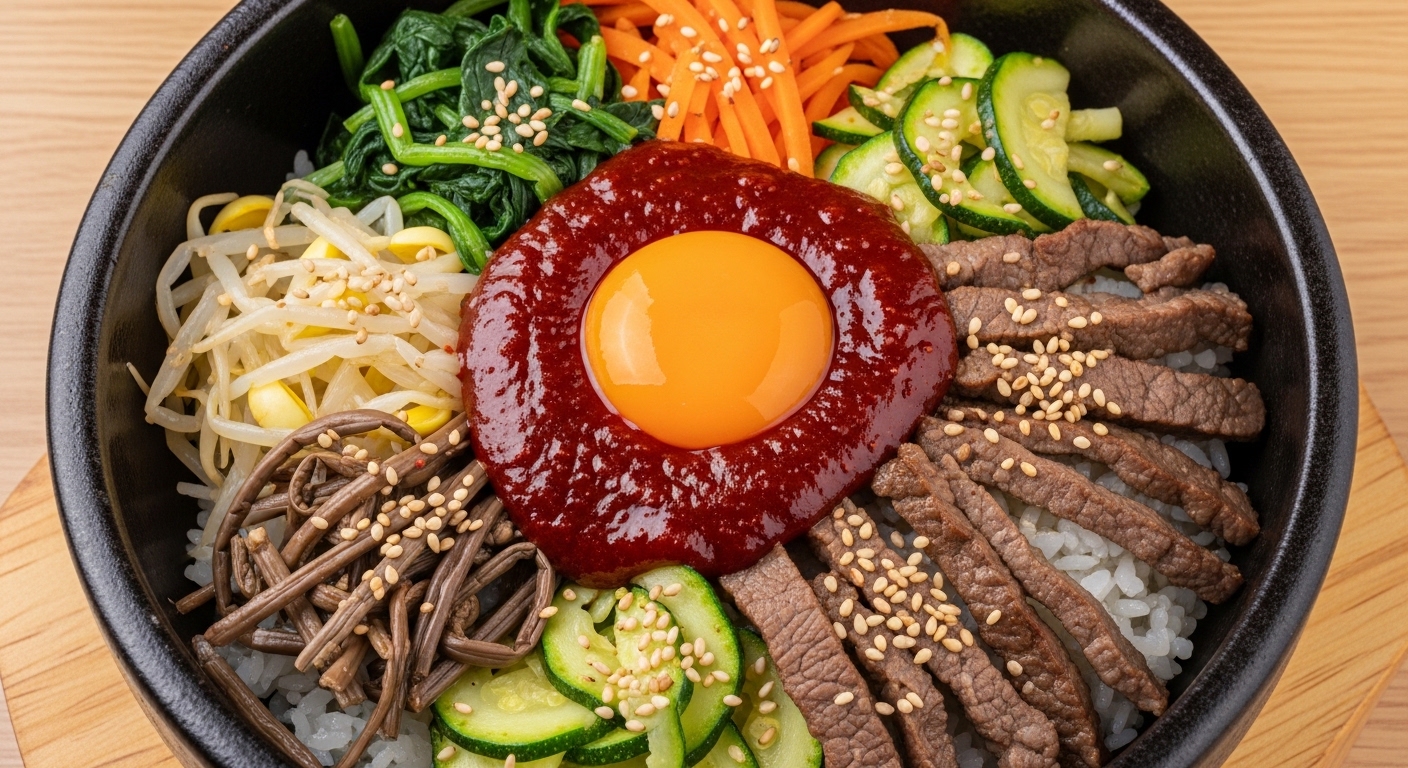
Bibimbap—literally “mixed rice” in Korean—is one of those dishes that’s so much greater than the sum of its parts. On its own, each component is relatively simple: steamed rice, some seasoned vegetables, a bit of marinated meat, a fried egg. But when you combine them all in a single bowl, add a generous spoonful of fiery gochujang sauce, and mix everything together, something remarkable happens. Every bite is a different combination of flavors and textures—sweet, savory, spicy, crispy, soft, chewy—and the fact that you’re eating the most visually stunning bowl of food imaginable doesn’t hurt either.
The Art of the Arrangement
If you’ve ever seen bibimbap at a Korean restaurant, the first thing you probably noticed was how beautiful it looked. The vegetables are arranged in distinct, colorful sections around the bowl like a pinwheel, each one occupying its own quadrant, with the egg perched on top like a crown. This presentation isn’t just for aesthetics—it’s a core part of the dining experience.
Each vegetable (called “namul” in Korean) is prepared separately with its own specific seasoning, which is why the flavors are so purposeful and distinct. It takes a little extra time compared to throwing everything in one pan, but the result is incomparably better. Each component maintains its individual identity while contributing to the harmonious whole. It’s a philosophy that runs deep in Korean cuisine—balance, contrast, and intention in every element.
Preparing Each Component
The key to great bibimbap is preparing each element with care, then assembling them all together at the end. None of the individual preparations are difficult, but there are several of them, so it helps to approach this like a mise en place exercise—get everything ready, arrange it on your countertop, then assemble.
The rice: Use short-grain rice, which has a slightly sticky texture that’s essential for bibimbap. The grains cling together enough to absorb the sauce and stay on your spoon, but they’re not as sticky as sushi rice. Rinse the rice in cold water until the water runs clear—this removes excess surface starch that would make it gummy. Cook according to your preferred method.
For the ultimate experience, make “dolsot bibimbap” by serving the rice in a screaming-hot stone bowl. The rice that contacts the hot stone forms a crispy golden crust called “nurungji,” which adds an incredible crunch and nutty, toasted flavor. If you don’t have stone bowls, you can create a similar effect by pressing rice into a hot, oiled cast iron skillet for a few minutes before assembling.
The beef: Marinate the thinly sliced beef in soy sauce, sesame oil, minced garlic, and sugar for at least thirty minutes. The combination of soy sauce and sesame oil is the backbone of many Korean marinades—it creates that deeply savory, aromatic foundation that Korean food is known for. Cook the beef quickly over high heat in a hot skillet, working in batches so it sears rather than steams. You want caramelized edges, not grey, boiled-looking meat.
The vegetables: The namul preparation technique is what makes bibimbap special—each vegetable gets its own seasoning and cooking method. If you enjoy this kind of methodical, component-by-component cooking, you’ll appreciate the approach in our Mushroom Risotto, which similarly builds flavor in careful stages.
-
Spinach: Blanch briefly in boiling water for thirty seconds, then immediately plunge into ice water to stop the cooking and preserve the bright green color. Squeeze out all excess water (this is important—watery spinach dilutes the bowl) and toss with a drizzle of sesame oil and a tiny pinch of salt.
-
Carrots: Julienne them into thin matchsticks and sauté in a bit of oil over medium-high heat for two to three minutes until just tender but still with a slight crunch. Season with a pinch of salt.
-
Zucchini: Salt the julienned zucchini and let it sit for ten minutes, then squeeze out the moisture. This draws out excess water that would otherwise make it soggy. Sauté quickly in oil until lightly golden.
-
Bean sprouts: Blanch for one minute in boiling water, drain, and toss with sesame oil and salt. They should be just barely cooked—still snappy, not limp.
-
Mushrooms: Sauté the sliced shiitakes in a bit of oil and soy sauce until deeply browned and concentrated in flavor.
Assembly and the Gochujang Sauce
-
Mix the sauce: Whisk together the gochujang, sesame oil, rice vinegar, sugar, and water until smooth. Taste it—it should be spicy, slightly sweet, tangy, and deeply savory all at once. Adjust any element to your preference. If you like it spicier, add more gochujang. If you prefer it sweeter, add more sugar. This sauce is the soul of the dish.
-
Fry the eggs: Fry four eggs in a bit of oil over medium heat until the whites are set but the yolk is still runny. The runny yolk acts as a second sauce when you break it open and mix it into the rice—it coats everything in a rich, velvety layer. A crispy-edged fried egg with a molten yolk is what you’re aiming for.
-
Assemble the bowls: Divide the hot rice among four bowls. Arrange each vegetable and the beef in distinct sections around the edge of the rice, creating a colorful pinwheel pattern. Place the fried egg in the center and sprinkle toasted sesame seeds over everything. Serve the gochujang sauce on the side or dollop it directly into the bowl.
-
Mix and eat: The final step belongs to each diner. Mix everything together vigorously with a spoon, ensuring the sauce, egg yolk, and all the components are thoroughly combined with the rice. Every bite should be a little different—that’s the beauty of bibimbap.
Tips for the Best Bibimbap
- Season each component individually: This is what separates a great bibimbap from a mediocre one. Each namul should taste delicious on its own before it goes into the bowl.
- Prep ahead: All the vegetable components can be prepared hours in advance and stored in the fridge. Bring them to room temperature before assembling, or give them a quick warm-up in the microwave.
- Gochujang quality matters: Look for authentic Korean gochujang at an Asian grocery store. The fermented paste has a complex flavor—spicy, sweet, savory, slightly funky—that generic “chili paste” can’t replicate.
- Vegetarian version: Skip the beef entirely and add extra vegetables—pickled radish, sautéed sweet potato, or seasoned tofu. Bibimbap is just as satisfying without meat, and it’s a traditional option in Korean temple cuisine.
Why Bibimbap Works
From a nutritional standpoint, bibimbap is one of the most balanced single-bowl meals in any cuisine. You’re getting complex carbohydrates from the rice, protein from the beef and egg, a wide range of vitamins and minerals from the variety of vegetables, and healthy fats from the sesame oil. It’s filling without being heavy, satisfying without being excessive. There’s a reason it’s been a staple of Korean home cooking for centuries. If you love grain-based bowl meals, you might also enjoy our Chicken Tikka Masala, which builds flavor through a similarly methodical spice layering approach.
My Kitchen Notes
I found that letting the beef marinate for a full hour instead of the minimum thirty minutes made a noticeable difference in depth of flavor—the soy and sesame really had time to penetrate. When prepping the vegetables, I like to set up small bowls for each namul before I start cooking anything. It keeps the process organized and prevents the “where did I put the salt?” panic that happens when you’re juggling five pans at once.
For the spinach, the ice bath step is genuinely important. I once skipped it in a rush and the spinach turned a dull olive green and tasted flat. Thirty seconds of extra effort keeps everything vibrant. Also, don’t underestimate the power of the stone bowl if you can get one—the crispy rice layer at the bottom, nurungji, transforms the entire experience. If you’re shopping for cookware, a good dolsot is one of the best investments for Korean home cooking.
One thing I’ve learned after making bibimbap dozens of times: the gochujang sauce is where you can really make it your own. I sometimes add a teaspoon of toasted perilla seed powder for an earthy, nutty note that’s common in Korean home kitchens but rarely seen in restaurant versions.
Common Mistakes to Avoid
- Overcrowding the beef during cooking: If the pan is too crowded, the beef steams instead of searing, resulting in grey, rubbery meat. Cook in small batches over high heat for proper caramelization.
- Skipping the water squeeze on spinach and zucchini: Excess moisture is the enemy of good bibimbap. Wet vegetables dilute the sauce and make the bowl soggy. Always squeeze thoroughly.
- Using long-grain rice: Long-grain rice won’t hold together the way short-grain does, and the texture will be wrong. Short-grain or medium-grain is essential.
- Overcooking the bean sprouts: Bean sprouts should be barely blanched—still snappy and crisp. Overcooking turns them limp and mushy.
- Using generic chili paste instead of gochujang: Gochujang is a fermented paste with complex sweetness and umami that chili garlic sauce or Sriracha simply cannot replicate.
Storage & Meal Prep Tips
Bibimbap is a meal prep dream because nearly every component stores beautifully. Cooked rice keeps in the refrigerator for up to five days and reheats well in the microwave with a damp paper towel over the bowl.
Prepared namul vegetables can be stored in individual airtight containers in the refrigerator for up to four days. Keep them separate to maintain their distinct flavors and textures. The marinated raw beef can be refrigerated for up to twenty-four hours before cooking.
The gochujang sauce keeps in a sealed jar in the refrigerator for up to two weeks. Give it a good stir before using since the ingredients can separate.
For assembly, I recommend keeping the components separate until serving. Reheat the rice and beef, arrange the cold or room-temperature vegetables on top, fry a fresh egg, and add the sauce at the last moment. This preserves the contrast in temperatures and textures that makes bibimbap so appealing.
If you want to freeze a full bibimbap kit, the beef and rice freeze well together in portions. Thaw overnight in the refrigerator and reheat before adding fresh vegetables and egg.
Frequently Asked Questions
Can I make bibimbap vegetarian?
Absolutely. Skip the beef and double up on vegetables. Seasoned tofu, sautéed sweet potato, pickled radish, and extra mushrooms all work beautifully. Korean temple cuisine has a long tradition of entirely plant-based bibimbap that’s every bit as satisfying as the meat version.
What if I don’t have a stone bowl?
You can still make excellent bibimbap without one. For a similar crispy rice effect, press the hot rice into a lightly oiled cast iron skillet over medium-high heat for three to four minutes until the bottom develops a golden crust, then transfer to your serving bowl. It won’t be identical to nurungji, but it captures the spirit.
How spicy is bibimbap?
The heat level is entirely in your control. The gochujang sauce is where the spice lives, and you can add as much or as little as you like. Start with a tablespoon per bowl and adjust from there. Gochujang itself is moderately spicy with a underlying sweetness, so even a generous amount won’t blow out most people’spalates.
Can I meal prep bibimbap for the whole week?
Yes. Prepare all the namul vegetables and the gochujang sauce on Sunday, store them in individual containers, and assemble fresh bowls throughout the week. The vegetables hold up well for four days. Cook rice fresh each day if possible, or reheat day-old rice with a splash of water to restore moisture.
What’s the difference between bibimbap and a regular rice bowl?
Bibimbap is defined by the separation and individual seasoning of each component before assembly, plus the gochujang sauce that ties everything together. A generic rice bowl typically means everything is cooked together or layered without the same attention to each element’s preparation. The namul technique is what makes bibimbap distinct.

About the Author
Makutu Bright
Software engineer, founder of Cracipes, and passionate home cook based in Kumasi, Ghana. BSc from KNUST, trained at AltSchool Africa. Combines food science research with real-world cooking experience to create reliable, well-tested recipes.
View All Recipes & Full Bio
Submission Received!
Your review is in the kitchen being moderated.