Japanese Chicken Katsu Curry
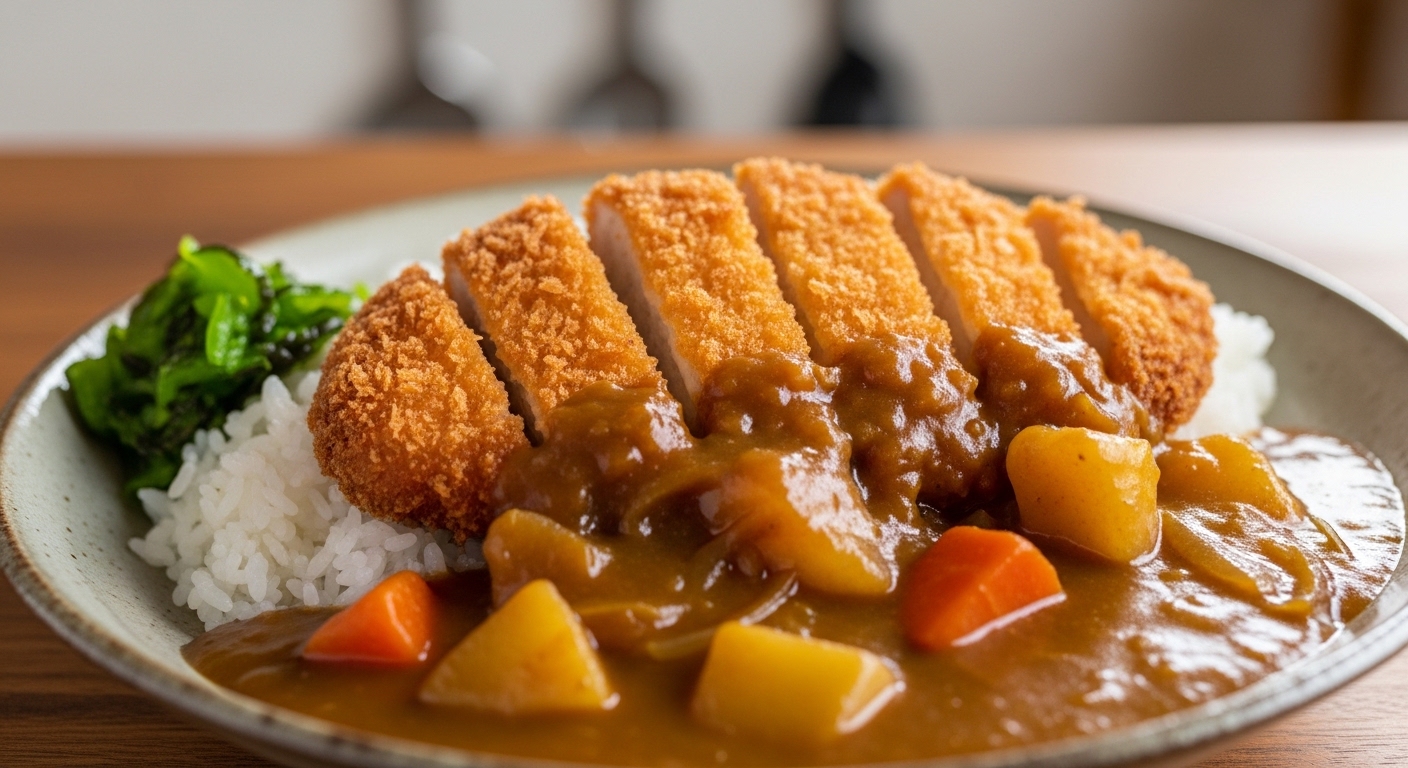
Japanese curry—“kare raisu”—holds a unique and beloved place in Japanese cuisine. Unlike the intensely spiced, fiery curries of India or Thailand, Japanese curry is mild, sweet, velvety smooth, and deeply comforting. It’s the kind of food that almost every Japanese person has strong childhood memories of—coming home from school to find a pot of curry bubbling on the stove, the warm, sweet aroma filling the entire house. It’s been voted Japan’s favorite food in multiple national surveys, beating out sushi and ramen. If you love exploring international comfort foods, our Thai Green Curry and Chicken Tikka Masala offer a fascinating contrast in spice philosophies. When you top it with a shattering-crisp chicken katsu cutlet, it becomes something genuinely transcendent—the contrast between the crunchy, golden exterior of the chicken and the smooth, aromatic curry sauce is one of the most satisfying textural combinations in cooking.
The History of Japanese Curry
Japanese curry has a fascinating lineage. Curry didn’t arrive in Japan from India—it came from Britain, which had adopted and adapted Indian curry during the colonial era. When the Japanese navy began adopting British naval customs in the late nineteenth century, curry was introduced as a naval mess hall food because it was easy to make in large quantities and kept well at sea. The Japanese adapted it to local tastes, making it sweeter, milder, and thicker than its Indian ancestor. It was initially a luxury food, but by the mid-twentieth century, with the introduction of instant curry roux blocks, it became one of the most common home-cooked meals in Japan.
Today, Japanese curry holds a cultural position similar to what mac and cheese or meatloaf holds in American cooking—pure, nostalgic, everyday comfort food that almost everyone loves. The fact that it’s easy to make is part of its charm. While you can absolutely use store-bought curry roux blocks (and they’re genuinely good—brands like S&B Golden Curry and Vermont Curry are universally popular in Japan), making the sauce from scratch gives you more control over the flavor and produces a cleaner-tasting, more nuanced result.
Making the Curry Sauce from Scratch
-
Sauté the aromatics: Melt the butter in a medium saucepan over medium heat. Add the diced onion and cook, stirring regularly, for about ten to twelve minutes until deeply golden brown. This long cooking time is essential—the caramelized onions provide the natural sweetness that characterizes Japanese curry. Add the diced carrots, garlic, and grated ginger, and cook for another three minutes.
-
Make the roux: Sprinkle the flour over the vegetables and stir continuously for about two minutes. The flour coats the vegetables and begins to cook, which will thicken the sauce. Add the curry powder, garam masala, and turmeric, and stir for another minute until the spices bloom and become fragrant. This step creates a roux similar to what you’d make for a French béchamel—Japanese curry technique is actually much closer to French sauce-making than to Indian curry-making, which makes sense given its British colonial origins.
-
Build the sauce: Gradually pour in the chicken stock, stirring constantly to prevent lumps from forming. Add the soy sauce, honey, and Worcestershire sauce. The combination of these condiments is quintessentially Japanese—the soy sauce adds umami depth, the honey provides sweetness, and the Worcestershire sauce (which is extremely popular in Japanese cooking) adds a complex, fruity tanginess.
-
Simmer and smooth: Bring the sauce to a gentle simmer and cook for about twenty minutes, stirring occasionally, until the carrots are tender and the sauce has thickened to a velvety consistency that coats the back of a spoon. For an ultra-smooth sauce, you can blend part or all of it with an immersion blender, though leaving some carrot pieces intact provides welcome texture.
Taste the curry and adjust—it might need a touch more honey if it’s not sweet enough, a splash more soy sauce for saltiness, or a squeeze of lemon juice if it tastes flat. Japanese curry should be mellow and balanced, not sharp or aggressively spiced.
Preparing the Chicken Katsu
The katsu technique is a classic Japanese frying method that produces an extraordinarily crispy coating thanks to the use of panko breadcrumbs.
-
Prepare the chicken: If the chicken breasts are thick, butterfly them or pound them to an even half-inch thickness between two sheets of plastic wrap. Even thickness is critical—it ensures the entire cutlet cooks at the same rate, so you don’t end up with dry edges and a raw center. Season both sides generously with salt and pepper.
-
Set up the breading station: Arrange three shallow dishes—one with flour, one with beaten eggs, and one with panko breadcrumbs. Dredge each chicken breast in flour first (this helps the egg adhere), then dip in the beaten egg (coating all surfaces), then press firmly into the panko on both sides. Press the panko in with your palms to create a dense, even coating. The coating should be thick and uniform—any thin spots will result in patchy, uneven crisping.
-
Fry the cutlets: Heat about an inch of vegetable oil in a deep skillet or Dutch oven to 350°F (175°C). Gently lower the breaded cutlets into the oil—don’t overcrowd the pan. Fry for about four to five minutes per side until the coating is deep golden brown and the chicken reaches an internal temperature of 165°F (74°C). The key to crispy katsu is maintaining steady oil temperature—adjust the burner as needed and use a thermometer.
-
Rest and slice: Transfer the fried cutlets to a wire rack set over a sheet pan. Let them rest for about three minutes—this allows the residual heat to finish cooking the center, and the coating stays crispy because it’s not sitting in its own steam (which is what happens when you drain on paper towels). Slice the katsu into strips about three-quarters of an inch wide, keeping the pieces together so the cutlet maintains its shape on the plate.
Assembling the Dish
Mound steamed Japanese short-grain rice on one side of a wide, shallow bowl or plate. Lean the sliced katsu against the rice, fanning the strips slightly to show off the contrast between the golden crust and the juicy white interior. Ladle the curry sauce generously alongside, letting it pool around the rice and lap at the edges of the katsu. Garnish with pickled ginger, a small pile of fukujinzuke (the sweet pickled relish that traditionally accompanies Japanese curry), or simply a sprinkle of fresh scallions.
Tips for the Best Results
- Panko vs. regular breadcrumbs: Panko breadcrumbs are made from crustless white bread using an electrical current that creates the airy, flaky texture. Regular breadcrumbs are ground finer and produce a denser, less crispy coating. For katsu, panko is non-negotiable.
- Double-fry technique: For even crispier katsu, fry the cutlets at 325°F for three minutes, remove them for five minutes, then fry again at 375°F for two minutes until deeply golden. This technique (borrowed from double-fried French fries) creates a shatteringly crisp exterior.
- Make extra curry sauce: The sauce freezes beautifully for up to three months. Keep individual portions in the freezer for quick weeknight meals—just thaw, reheat, and serve with fresh katsu or even just over rice.
- Pork variation: Traditional tonkatsu uses pork loin instead of chicken. The preparation is identical, but the frying time may be slightly longer since pork needs to reach 145°F (63°C).
My Kitchen Notes
The single biggest improvement I made to my katsu curry was letting the curry sauce simmer longer than the recipe minimum. Twenty minutes is the baseline, but if you let it go thirty to thirty-five minutes on a very low simmer, the onions dissolve further and the sauce develops a deeper sweetness that tastes like it simmered all day. I also started adding a small splash of apple cider vinegar at the end—it brightens the whole sauce without making it taste acidic.
For the katsu itself, I learned the hard way that skipping the resting step after frying is a mistake. Those three minutes on the wire rack aren’t optional. The first time I sliced into a cutlet immediately out of the oil, the juices ran out onto the board and the chicken was noticeably drier. Letting it rest keeps the interior juicy and the crust intact.
I also find that the temperature of the chicken before frying matters. If the cutlets are straight from the fridge, the center takes longer to cook, which means the crust can overbrown before the inside is done. Pulling the chicken out of the refrigerator ten minutes before breading helps even out the cooking.
Common Mistakes to Avoid
- Overcrowding the frying pan: This drops the oil temperature and causes the breading to absorb oil instead of crisping. Fry in batches and maintain steady temperature at 350°F.
- Not pounding the chicken to even thickness: Thick spots will be raw while thin spots are overcooked. An even half-inch thickness across the entire cutlet is critical for uniform results.
- Using regular breadcrumbs instead of panko: The coating will be dense and heavy rather than light and shatteringly crispy. Panko is essential for authentic katsu texture.
- Over-stirring the roux: Once you add the flour and spices, stir constantly but don’t rush. The roux needs about two minutes to cook out the raw flour taste. Undercooking it leaves a pasty flavor in the finished sauce.
- Forgetting to taste and adjust the curry: Japanese curry should be balanced between sweet, savory, and mild spice. Always taste at the end and adjust with honey, soy sauce, or a squeeze of lemon as needed.
Storage & Meal Prep Tips
The curry sauce is one of the best meal prep recipes you can make. It keeps in an airtight container in the refrigerator for up to five days and actually improves overnight as the flavors meld. It also freezes exceptionally well for up to three months—portion it into individual containers for quick weeknight dinners.
Chicken katsu is best eaten fresh for optimal crispiness, but you can refrigerate cooked cutlets for up to three days. Reheat in a 375°F oven for about ten minutes to restore the crunch—microwaving will make the breading soggy. You can also freeze uncooked breaded cutlets between sheets of parchment paper for up to one month, then fry directly from frozen, adding a minute or two to the cooking time.
For meal prep, I recommend storing the rice, curry sauce, and katsu separately. Reheat the rice and sauce together, then slice fresh katsu or reheat it in the oven before serving. This keeps each component at its best.
Frequently Asked Questions
Can I use store-bought curry roux blocks instead of making sauce from scratch?
Yes, and there’s no shame in it. Brands like S&B Golden Curry and Vermont Curry are popular in Japanese households for a reason—they taste good and save significant time. The from-scratch version gives you more control over sweetness and spice levels, but the roux block method is a legitimate shortcut that produces a perfectly respectable curry.
Why is my katsu breading falling off the chicken?
This usually happens for one of three reasons: the chicken surface was too wet before breading, the flour-to-egg-to-panko sequence was rushed, or the oil wasn’t hot enough when you added the cutlet. Make sure you pat the chicken dry, press the panko firmly into the surface, and confirm your oil is at 350°F before frying.
Can I bake the katsu instead of frying it?
You can, though the texture will be different. Spray or brush the breaded cutlets generously with oil and bake at 425°F on a wire rack set over a sheet pan for about twenty minutes, flipping halfway through. It won’t reach the same level of crunch as deep-frying, but it’s a lighter option that still tastes good.
What is fukujinzuke, and do I need it?
Fukujinzuke is a sweet and savory relish made from pickled daikon radish, eggplant, lotus root, and cucumber. It’s the traditional condiment served alongside Japanese curry in Japan, adding a crunchy, tangy contrast. It’s not required, but it’s a nice touch if you can find it at an Asian grocery store.
Is Japanese curry very different from Indian or Thai curry?
Fundamentally yes. Japanese curry was adapted from British naval curry, not directly from Indian cuisine. It’s milder, sweeter, thicker, and more sauce-like. The spice profile relies on a mild curry powder blend rather than fresh chilies or complex whole spice mixtures. It occupies a similar comfort food role in Japan that stews and casseroles do in Western cuisines.

About the Author
Makutu Bright
Software engineer, founder of Cracipes, and passionate home cook based in Kumasi, Ghana. BSc from KNUST, trained at AltSchool Africa. Combines food science research with real-world cooking experience to create reliable, well-tested recipes.
View All Recipes & Full Bio
Submission Received!
Your review is in the kitchen being moderated.