Crispy Baja-Style Fish Tacos with Chipotle Crema
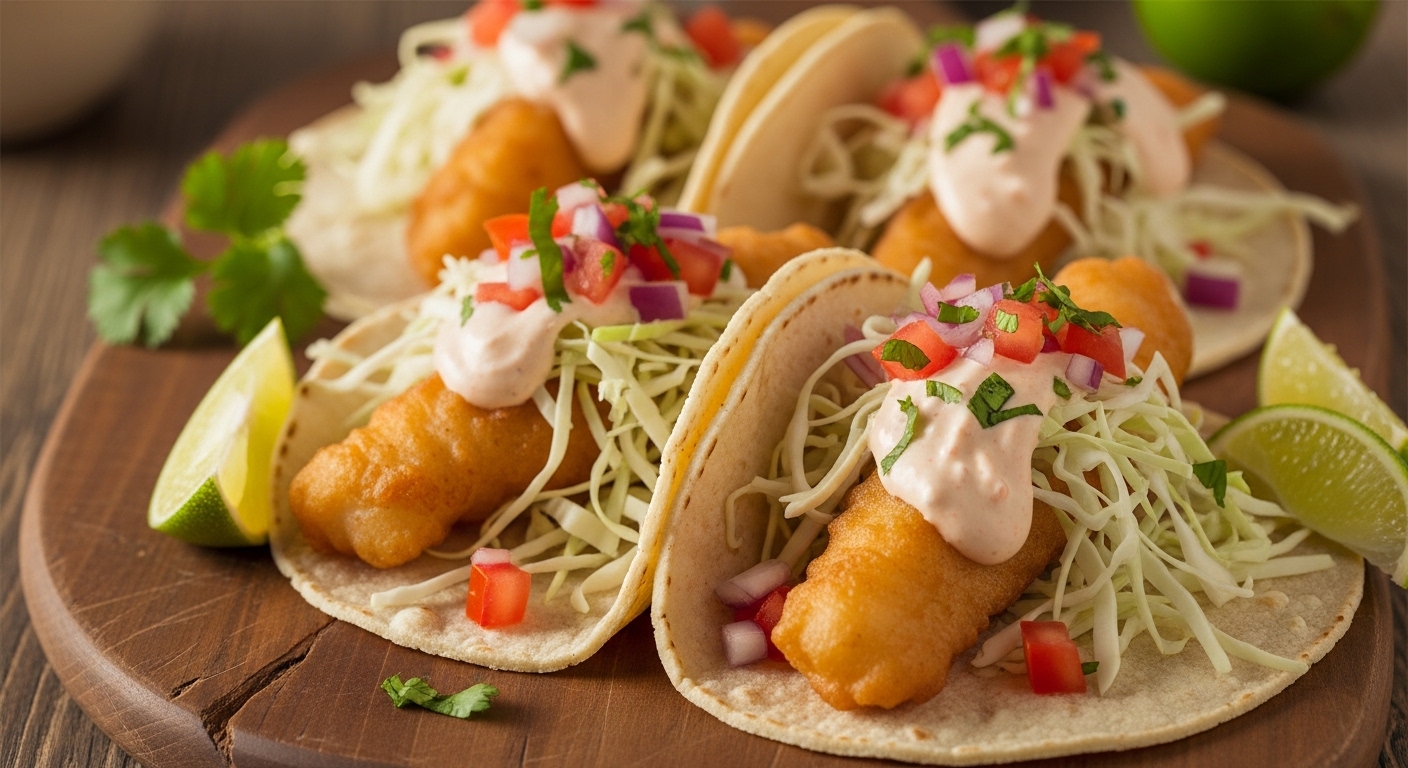
The first time I had real Baja-style fish tacos was from a tiny roadside stand in Ensenada, Mexico, and it fundamentally changed what I thought a taco could be. Everything about it was a study in contrast—the fish was impossibly light and crispy on the outside, with a shatteringly thin batter that crackled when you bit through it, revealing tender, flaky white fish inside. The cold, crunchy cabbage slaw cut through the richness of the fried fish, and the creamy, smoky sauce tied everything together. It was served on a small, warm corn tortilla that was barely big enough to hold it all. Nothing fancy, nothing complicated, but absolutely perfect.
The Secret to a Great Beer Batter
A good beer batter should be light and crispy, not thick and bready. The common mistake is making it too heavy, which creates a dense, doughy coating that overwhelms the delicate fish underneath. The goal is a thin, almost lace-like shell that shatters on contact.
Three things make this batter work. First, the beer—the carbonation creates tiny bubbles in the batter that expand in the hot oil, resulting in an airy, puffed texture rather than a dense one. Use a light Mexican lager like Modelo or Pacifico. Heavy, malty beers will make the batter taste too yeasty. Second, the cornstarch—it replaces a portion of the flour, which reduces gluten development and produces a markedly crispier result. Third, the temperature—keep everything cold. The batter should be mixed right before frying, and the beer should come straight from the fridge. The temperature difference between the cold batter and the hot oil is part of what creates that explosive crispiness.
Mix the dry ingredients first, then pour in the cold beer and whisk until just combined. There should be small lumps—overmixing develops gluten and makes the batter tough. It should have the consistency of heavy cream, thin enough to drip off the fish in a light, even coating rather than clinging in thick blobs.
Choosing and Preparing the Fish
Cod is the top choice because it has a mild, clean flavor that doesn’t compete with the taco toppings, and it holds together well during frying. Mahi-mahi is firmer and slightly sweeter, which gives the tacos a more substantial feel. Halibut works beautifully but can be expensive. Avoid fish that flakes too easily, like tilapia or sole—they tend to fall apart in the batter and can be difficult to handle.
Cut the fish into strips about one inch wide and three to four inches long. This size is perfect for tucking into a taco, and the high surface-area-to-volume ratio means more crispy batter in every bite. Pat the fish very dry before dipping it in the batter. Any moisture on the surface will prevent the batter from adhering properly and cause the oil to sputter dangerously.
Putting It All Together
-
Make the chipotle crema: Combine the sour cream, mayonnaise, minced chipotle peppers, adobo sauce, and lime juice in a bowl. Season with salt, cover, and refrigerate until ready to use. This can be made a day ahead—the flavors actually improve overnight. The smokiness from the chipotles and the tang from the lime make this sauce almost addictive. Start with two peppers and taste—you can always add more if you want more heat and smoke.
-
Prepare the slaw: Toss the shredded green and red cabbage with the cilantro, sliced jalapeño, lime juice, olive oil, and a pinch of salt. The slaw should be dressed lightly—you don’t want it dripping wet, just lightly coated. Make it right before you start frying so it stays crunchy. The red cabbage isn’t just for color (though it does make the tacos look spectacular)—it has a slightly different, sweeter flavor that adds another layer of complexity.
-
Fry the fish: Pour about two inches of vegetable oil into a heavy-bottomed pot or Dutch oven and heat it to 375°F (190°C). Use a thermometer—temperature control is critical here. Too cool and the fish absorbs oil and turns greasy; too hot and the batter burns before the fish cooks through. Dip each strip of fish in the batter, let the excess drip off for a few seconds, and carefully lower it into the oil. Fry three to four strips at a time for about three to four minutes, turning once, until the batter is deep golden and crispy. Drain on a wire rack set over a sheet pan—not on paper towels, which trap steam underneath and soften the bottom.
-
Warm the tortillas: Char the tortillas directly over a gas flame for about fifteen seconds per side, or warm them in a dry skillet. This step matters—a cold, stiff tortilla ruins the whole experience. You want them pliable and slightly charred, with a few dark spots and a smoky, toasted corn flavor.
-
Assemble: Place a couple pieces of crispy fish on each warm tortilla, top with a generous pile of slaw, drizzle with chipotle crema, and serve with lime wedges. Squeeze the lime over everything right before eating—the acid brightens every element and cuts through the richness of the fried fish and creamy sauce.
Tips for Better Fish Tacos
- Double-layer your tortillas: Street taco style—stack two small corn tortillas together for each taco. This prevents the tortilla from tearing under the weight of the fillings and gives you a sturdier base.
- Oil temperature recovery: After each batch of fish, let the oil come back up to 375°F before adding the next batch. Adding food drops the temperature, and frying at too low a temperature is the number one cause of greasy, heavy results.
- Quick pickled onions: If you have an extra twenty minutes, thinly slice a red onion and soak it in lime juice, a pinch of sugar, and salt. These quick-pickled onions add an incredible tangy crunch that takes the tacos to another level.
- Grilled option: If you prefer not to fry, season the fish with the same spices as the batter, brush with oil, and grill or broil for three to four minutes per side. You lose the crispy batter but gain lovely charred edges and a lighter dish. For more seafood inspiration, try our Shrimp Scampi Linguine — another weeknight-friendly dish that’s ready in under 30 minutes.
My Kitchen Notes
After making these tacos dozens of times, I’ve picked up a few things that make a real difference. The single biggest upgrade is using a thermometer to monitor your oil temperature. I used to eyeball it, and the results were inconsistent — sometimes perfectly crispy, sometimes greasy. Once I started using a thermometer, the fish came out perfectly golden and crunchy every single time. Another tip: I always pat the fish strips bone dry with paper towels before dipping them in the batter. Any surface moisture causes the batter to slide off and the oil to splatter, so taking an extra thirty seconds here pays off. I also discovered that using a wire rack instead of paper towels for draining makes a huge difference. Paper towels trap steam underneath the fish and soften the crispy bottom, while a wire rack lets the air circulate and keeps every side shatteringly crisp. Finally, I’ve learned to fry the fish in small batches. It’s tempting to load up the pot to save time, but dropping too many cold strips into the oil at once drops the temperature dramatically, and the fish absorbs the oil instead of getting crispy.
Common Mistakes to Avoid
- Frying at the wrong oil temperature: Too low and the fish absorbs oil and turns greasy; too high and the batter burns before the fish is cooked through. Use a thermometer and keep the oil at 375°F. Let the oil recover between batches.
- Not drying the fish before battering: Any moisture on the fish surface will prevent the batter from sticking properly and will cause dangerous oil splatters. Pat the fish completely dry before dipping.
- Overmixing the batter: Like pancake batter, a few small lumps are fine. Overmixing develops gluten and results in a thick, bready coating rather than a light, shattering shell.
- Letting the batter sit too long before frying: Mix the batter right before you’re ready to fry. The carbonation in the beer starts dissipating immediately, and a batter that sits too long loses its airy quality.
- Draining on paper towels instead of a wire rack: Paper towels trap steam underneath the fried fish, softening the crispy bottom you worked so hard to achieve. Always use a wire rack.
Storage & Meal Prep Tips
Fish: Fried fish is best enjoyed fresh and hot right out of the oil. If you have leftovers, let them cool to room temperature, then store them in a single layer in an airtight container in the refrigerator for up to two days. To reheat, place them on a wire rack in a 400°F oven for about ten minutes, which revives some of the crispiness. The microwave will make them soggy, so avoid that.
Chipotle crema: The sauce keeps beautifully in the fridge for up to five days. In fact, the flavors improve after a day or two as the smokiness from the chipotles melds with the lime and sour cream. Store it in a sealed container and give it a good stir before serving.
Slaw: The cabbage slaw can be prepped up to a day in advance. Shred the cabbage and store it in a zip-top bag lined with a paper towel to absorb moisture. Keep the dressing separate until right before serving — this keeps the cabbage crunchy instead of limp.
Meal prep idea: Prep the slaw and chipotle crema ahead of time. When you’re ready to eat, just fry the fish and warm the tortillas. Having the components ready to go cuts your active time in half and makes taco night feel effortless. You can also use leftover fish in a grain bowl or over a salad the next day for a quick lunch.
Frequently Asked Questions
What kind of fish works best for fish tacos?
Firm, mild white fish is ideal. Cod is the classic choice — it’s mild, flaky, and affordable. Mahi-mahi is firmer and slightly sweeter, giving the tacos a more substantial bite. Halibut is delicious but pricier. Avoid fish that flakes too easily, like tilapia or sole, as they tend to fall apart in the batter and during frying.
Can I use flour tortillas instead of corn tortillas?
Absolutely. Flour tortillas are actually more forgiving and less likely to tear, which makes them a good choice if you’re loading up your tacos with toppings. That said, corn tortillas are more traditional for Baja-style tacos and have a more authentic, earthy flavor. Either way, warm them before assembling — a cold, stiff tortilla ruins the experience.
How do I keep the oil temperature consistent between batches?
After removing the fried fish, let the oil sit for a minute or two and check the temperature with a thermometer before adding the next batch. If the oil has dropped below 375°F, give it time to come back up. Frying at too low a temperature is the number one cause of greasy, heavy fish. Resist the temptation to rush.
Can I make these tacos in the oven instead of frying?
You can bake or broil the fish for a lighter version. Season the fish strips, place them on a wire rack set over a baking sheet, and bake at 425°F for about 12-15 minutes, flipping once halfway through. You won’t get the same shatteringly crispy batter, but the fish will still be tender and flavorful. Brushing with a little oil before baking helps mimic some of that fried crispiness.
What to Serve Alongside
Mexican street corn (elote) is the perfect companion—grilled corn on the cob slathered with mayo, cotija cheese, chili powder, and lime. Black beans and cilantro rice round out the meal into a full spread. For drinks, an ice-cold Mexican lager with a lime wedge or a fresh watermelon agua fresca keeps everything in theme and provides a refreshing contrast to the bold, smoky flavors. If you’re on a taco roll, our Homemade Margherita Pizza is another crowd-pleaser that comes together quickly for casual entertaining.

About the Author
Makutu Bright
Software engineer, founder of Cracipes, and passionate home cook based in Kumasi, Ghana. BSc from KNUST, trained at AltSchool Africa. Combines food science research with real-world cooking experience to create reliable, well-tested recipes.
View All Recipes & Full Bio
Submission Received!
Your review is in the kitchen being moderated.