Butter Chicken (Murgh Makhani)

Introduction
Butter chicken, known in Hindi as Murgh Makhani, is one of India’s most beloved dishes around the world. The story goes that it was invented in the 1950s at Moti Mahal restaurant in Delhi, where leftover tandoori chicken was simmered in a buttery tomato sauce to keep it from drying out. What began as a practical solution became a culinary phenomenon that now graces menus on every continent. (Source: Achaya, K.T. “Indian Food: A Historical Companion,” Oxford University Press, 1994)
What makes butter chicken special is its balance of flavors. The sauce is rich without being heavy, mildly spiced without being bland, and tangy without being sharp. Unlike its close cousin, Chicken Tikka Masala, which leans more tomato-forward and spice-driven, butter chicken is all about that velvety, buttery smoothness. It is the comfort food of Indian cuisine, and once you make it at home, you will wonder why you ever ordered takeout.
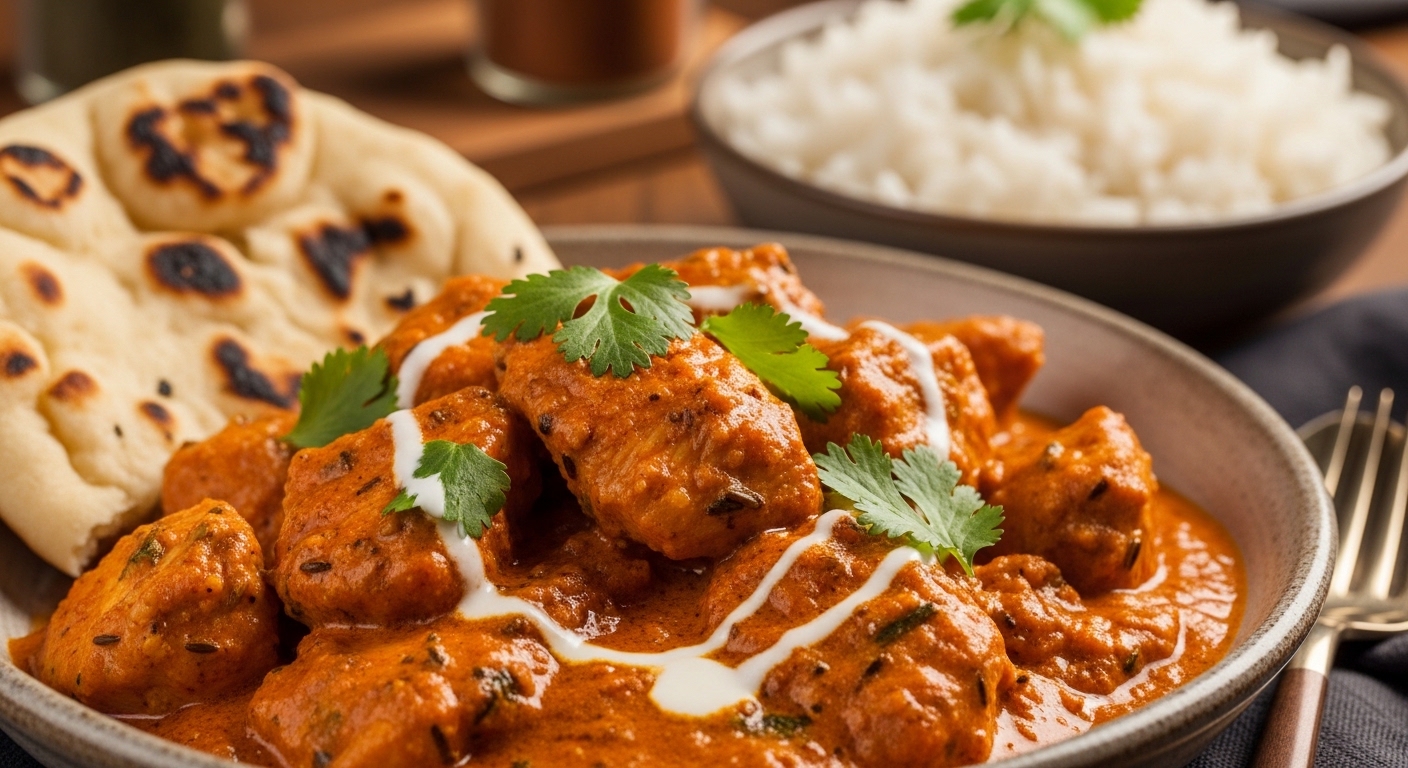
This recipe stays true to the classic preparation while being practical for a home kitchen. The chicken is marinated in yogurt and spices for tenderness, then seared before being nestled into a luscious tomato-butter sauce. Fenugreek leaves add that unmistakable earthy sweetness you find in restaurant versions. Serve it over fluffy basmati rice or tear into warm naan, and you have a meal that tastes like it came from a professional kitchen.
The Cultural and Historical Context of Butter Chicken
Butter chicken traces its origins to post-partition India, when Kundan Lal Gujral, a Hindu refugee from Peshawar (now in Pakistan), rebuilt his restaurant Moti Mahal in Delhi. Gujral had been famous for his tandoori chicken, cooked in clay tandoor ovens that were brought from the northwest frontier. The story goes that one evening, with leftover tandoori chicken that was drying out, the chefs created a sauce of butter, tomatoes, and cream to revive the meat. The result was so delicious that it became a permanent menu item.
The dish became a symbol of the melting pot that is Delhi’s food culture. It represents the Punjabi cooking tradition that migrated east during partition, carrying with it the bold flavors and generous use of dairy that define North Indian cuisine. Over the decades, butter chicken became one of the most ordered dishes in Indian restaurants worldwide, second perhaps only to chicken tikka masala, which itself is an offshoot of the same tandoori chicken tradition.
Understanding this history matters because it tells you something about the dish: butter chicken is meant to be forgiving and adaptable. It was born from improvisation, from making the best of what was available. The recipe you make at home does not need to replicate a restaurant exactly. What it needs is soul, generosity with the butter and cream, and a willingness to let the flavors meld slowly.
Understanding the Ingredients
Chicken thighs are the better choice over breasts here. They stay juicy during the searing and simmering process, and their higher fat content means the meat stays tender even if you slightly overcook it. The marination in yogurt does double duty: the lactic acid gently breaks down the surface proteins for tenderness, while the spices penetrate the meat for flavor that goes beyond the surface.
Kashmiri chili powder (or a mix of paprika and cayenne) gives the sauce its characteristic warm red color without overwhelming heat. If you cannot find Kashmiri chili, sweet paprika works as a base with just a pinch of cayenne for warmth. This is one area where butter chicken differs from tikka masala — the heat is kept low to let the butter and cream shine.
Fenugreek leaves (kasuri methi) are the secret weapon of this dish. Dried fenugreek has a slightly bitter, maple-like aroma that adds depth to the sauce. It might seem like an exotic ingredient, but it is available at most Indian grocery stores and keeps indefinitely in your pantry. If you cannot find it, a small amount of maple syrup can approximate the sweetness, though it will not be quite the same.
Butter and cream are non-negotiable. This is butter chicken, after all. The combination creates a sauce that clings to the chicken with a luxurious, velvety texture. Use good quality butter and heavy cream with at least 35% fat for the best results.
Tomato paste and crushed tomatoes form the backbone of the sauce. The paste adds concentrated umami and color, while the crushed tomatoes provide body and a natural sweetness that develops as they cook down.
Step-by-Step Instructions
1. Marinate the chicken. In a large bowl, combine the yogurt, lemon juice, cumin, cinnamon, cayenne pepper, ginger, and salt. Add the chicken chunks and toss until every piece is coated. Cover with plastic wrap and refrigerate for at least 30 minutes, or up to 8 hours for deeper flavor.
2. Sear the chicken. Heat 1 tablespoon of butter and the olive oil in a large skillet or Dutch oven over medium-high heat. Remove the chicken from the marinade, shaking off excess yogurt. Sear the chicken pieces in batches until golden brown on all sides, about 3-4 minutes per batch. The chicken does not need to be cooked through — it will finish in the sauce. Transfer to a plate and set aside.
3. Build the sauce base. In the same skillet, add the remaining 2 tablespoons of butter. Reduce heat to medium and add the diced onion. Cook, stirring occasionally, until softened and lightly golden, about 8 minutes. Add the garlic and tomato paste, stirring constantly for 1 minute until fragrant and the paste darkens slightly.
4. Add the tomatoes and simmer. Pour in the crushed tomatoes and stir to combine, scraping up any browned bits from the bottom of the pan. Bring to a gentle simmer and cook for 15 minutes, stirring occasionally, until the sauce thickens and the raw tomato taste cooks out. The sauce should reduce by about a third.
5. Blend the sauce. Using an immersion blender, blend the sauce until completely smooth. Alternatively, transfer it to a blender in batches (being careful with the hot liquid) and blend until silky. Return the sauce to the skillet.
6. Finish the sauce. Stir in the heavy cream, garam masala, honey, and dried fenugreek leaves. Let the sauce simmer gently for 5 minutes. Taste and adjust salt and sweetness as needed.
7. Combine chicken and sauce. Return the seared chicken to the skillet along with any juices that have collected on the plate. Stir to coat the chicken in the sauce and simmer for another 5-7 minutes, until the chicken is cooked through and tender.
8. Rest and serve. Remove from heat and let the dish rest for 5 minutes. The sauce will continue to thicken slightly as it sits. Garnish with fresh cilantro and serve hot over steamed basmati rice or with warm naan bread.
Tips for Success
- Do not skip the marination time. Even 30 minutes makes a noticeable difference in the tenderness and flavor of the chicken. Overnight is ideal.
- Use a heavy-bottomed pan or Dutch oven to prevent the sauce from scorching. The tomatoes and cream are prone to sticking if the heat is too high.
- If the sauce is too thick after blending, thin it with a splash of chicken broth or water. It should coat the back of a spoon but still flow easily.
- Toast the garam masala in a dry pan for 30 seconds before adding it to release its essential oils and deepen the flavor.
- Let the finished dish rest before serving. Like many stews and braises, butter chicken improves as it sits for a few minutes, allowing the flavors to settle.
Variations
Lighter version: Replace the heavy cream with half-and-half or coconut cream. The sauce will be slightly less rich but still delicious. You can also use Greek yogurt in place of some of the cream.
Vegetarian version: Swap the chicken for paneer cubes, firm tofu, or a mix of cauliflower and chickpeas. Sear the paneer or tofu before adding to the sauce, or roast the cauliflower for deeper flavor.
Spicier version: Add a diced jalapeño or serrano pepper with the onions, and increase the cayenne to 1-2 teaspoons. For authentic heat, use fresh green chilies blended into the sauce.
Slow cooker version: Sear the chicken as directed, then add all sauce ingredients and the chicken to a slow cooker. Cook on low for 4-6 hours or high for 2-3 hours. Shred or leave in chunks as preferred.
My Kitchen Notes
I have made butter chicken more times than I can count, and here is what I have learned: the quality of your tomatoes matters more than you think. If you can find San Marzano-style crushed tomatoes or good Indian brand canned tomatoes, the sauce will have a deeper, sweeter flavor that needs less honey to balance.
I also find that making it a day ahead and reheating it gently gives you an even better result. The spices have time to marry, the fenugreek deepens, and the sauce develops a complexity that a freshly made batch just cannot match. If you are planning a dinner party, this is the dish to make the night before.
Finally, do not be shy with the butter. The recipe calls for 3 tablespoons, but I often add an extra tablespoon right at the end, swirling it in off the heat for extra richness. This is butter chicken, not diet chicken.
Common Mistakes to Avoid
- Using chicken breasts instead of thighs, which tend to dry out and become rubbery in the simmering sauce.
- Skipping the fenugreek leaves, which are the ingredient that gives butter chicken its distinctive restaurant-quality flavor and aroma.
- Cooking the sauce at too high a heat after adding the cream, which can cause it to split and become grainy.
- Blending the sauce before it has simmered long enough, resulting in a raw tomato flavor rather than a deep, developed one.
- Not marinating the chicken. Even a short marination time transforms the texture and flavor of the meat.
Storage and Meal Prep Tips
Butter chicken stores beautifully in the refrigerator for up to 4 days. Let it cool completely before transferring to an airtight container. The sauce may thicken in the fridge — simply add a splash of water or cream when reheating gently over medium-low heat.
For freezing, butter chicken keeps well for up to 3 months. Cool the dish completely, then divide into portion-sized containers. Thaw overnight in the refrigerator and reheat gently. The texture may change slightly, but the flavor remains excellent.
For meal prep, portion the chicken and sauce into individual containers with a side of basmati rice. Refrigerate for up to 4 days and reheat in the microwave or on the stovetop. This reheats better than most curries because of the cream and butter content.
Frequently Asked Questions
Can I use chicken breasts instead of thighs?
You can, but thighs are strongly recommended. Chicken breasts are leaner and tend to dry out during the searing and simmering process. If you only have breasts, cut them into larger chunks, sear them quickly just until the outside is golden, and add them to the sauce for the final 5 minutes only. Do not overcook them.
What if I cannot find fenugreek leaves?
Fenugreek leaves (kasuri methi) are available at Indian grocery stores and online. If you absolutely cannot find them, a tiny amount of maple syrup or crushed coriander seeds can add a similar earthy sweetness, though the flavor will not be identical. Some recipes substitute a pinch of dried oregano, which has a vaguely similar herbal note.
Is butter chicken the same as chicken tikka masala?
They are related but distinct dishes. Both use tandoori-style chicken in a tomato-based sauce, but butter chicken is milder, richer, and more butter-forward, while tikka masala is spicier and more tomato-forward. Butter chicken also uses fenugreek leaves and honey, which are not typical in tikka masala. For more on the tikka masala variation, see our Chicken Tikka Masala recipe.
Can I make this dairy-free?
Yes. Replace the yogurt marinade with coconut yogurt, use olive oil instead of butter, and swap the heavy cream for full-fat coconut cream. The result will be different from the traditional version but still delicious. The coconut adds a subtle sweetness that pairs well with the spices.
How do I thicken the sauce if it is too thin?
If your sauce is too thin after blending, return it to the pan and simmer uncovered for 5-10 minutes to reduce. You can also mix 1 teaspoon of cornstarch with 2 tablespoons of cold water and stir it into the sauce, then simmer for 2-3 minutes until thickened. However, a properly simmered sauce usually thickens on its own as the tomatoes and cream reduce.

About the Author
Makutu Bright
Software engineer, founder of Cracipes, and passionate home cook based in Kumasi, Ghana. BSc from KNUST, trained at AltSchool Africa. Combines food science research with real-world cooking experience to create reliable, well-tested recipes.
View All Recipes & Full Bio
Submission Received!
Your review is in the kitchen being moderated.