Fluffy Blueberry Pancakes

Introduction
There is a reason blueberry pancakes are the undisputed king of weekend breakfasts. The combination of a fluffy, buttery batter studded with juicy blueberries that burst into pockets of jammy sweetness is one of those simple pleasures that never gets old. Add a drizzle of real maple syrup and a pat of melting butter, and you have a plate of pure comfort.
But here is the truth most pancake recipes will not tell you: fluffiness is not magic. It is science. The ratio of leavening to acid, the temperature of your ingredients, and how you handle the batter all determine whether your pancakes stack up tall and tender or spread flat and dense. This recipe has been tested and refined to give you consistently light, airy pancakes with crispy golden edges every single time.
The secret is buttermilk. Its acidity reacts with baking soda to create carbon dioxide bubbles that lift the batter as it cooks, creating those signature air pockets that make a pancake fluffy rather than heavy. Combined with a little lemon zest for brightness and fresh blueberries for color and flavor, these are the pancakes you have been dreaming about. If you love breakfast baking, you might also enjoy our Fluffy Buttermilk Pancakes as a classic base recipe.
The Cultural and Historical Context of Blueberry Pancakes
Pancakes are one of the oldest prepared foods in human history. Archaeological evidence suggests that flat cakes cooked on hot surfaces date back tens of thousands of years. The ancient Greeks made塔rtis, and Romans had a version called alia dulcia made with milk and honey. But the pancakes we know today — round, leavened, and served with syrup — are a distinctly American creation.
The American pancake evolved from the British crumpet and the Dutch pannenkoek, brought to the New World by early settlers. By the 19th century, the addition of baking powder (invented in the 1840s) revolutionized pancake-making, transforming thin, dense cakes into the tall, fluffy stacks we associate with American breakfast culture.
Blueberries entered the pancake picture in the early 20th century, as cultivated blueberries became widely available in the northeastern United States. Native Americans had been harvesting wild blueberries for centuries, and the fruit quickly became a beloved addition to everything from muffins to pies to pancakes. Today, blueberry pancakes are so deeply embedded in American food culture that they are practically a rite of passage — the first thing many people learn to cook.
Understanding the Ingredients
Buttermilk is the foundation of this recipe. Its thick, tangy liquid does three things: the acidity activates the baking soda for lift, the thick consistency adds body to the batter, and the tanginess balances the sweetness of the blueberries and maple syrup. If you do not have buttermilk on hand, you can make a substitute by adding 2 tablespoons of white vinegar or lemon juice to 2 cups of regular milk and letting it sit for 5 minutes. It will not be quite as thick, but it works.
Baking powder and baking soda work together here. Baking soda reacts immediately with the buttermilk acid for an initial rise, while baking powder provides a second lift when heated in the pan. This double leavening is what creates the tall, fluffy texture. Do not skip either one.
Melted butter adds richness and flavor to the batter, and contributes to the golden-brown exterior of each pancake. The butter should be melted and slightly cooled before adding to the batter — if it is too hot, it will partially cook the eggs and create a lumpy batter.
Fresh blueberries are ideal for this recipe. They hold their shape during cooking and burst into juicy pockets of flavor when you bite into them. If using frozen blueberries, do not thaw them first — add them directly to the batter. Thawed berries release too much juice and turn the batter purple. The lemon zest is optional but recommended: it adds a bright, aromatic note that makes the blueberry flavor pop.
Step-by-Step Instructions
1. Mix the dry ingredients. In a large bowl, whisk together the flour, sugar, baking powder, baking soda, and salt. Make sure the leavening agents are evenly distributed — no one wants a pancake that rises on one side and stays flat on the other.
2. Mix the wet ingredients. In a separate bowl, whisk together the buttermilk, eggs, melted butter, vanilla extract, and lemon zest until smooth. The mixture should be uniform in color with no streaks of egg.
3. Combine wet and dry. Pour the wet ingredients into the dry ingredients and stir gently with a spatula or wooden spoon. Mix until just combined — the batter should be lumpy with visible streaks of flour. This is important. Overmixing develops gluten in the flour, which makes pancakes tough and chewy instead of light and tender. A few lumps are perfectly fine.
4. Fold in the blueberries. Gently fold the fresh blueberries into the batter with a spatula. Be delicate — you want to distribute the berries without crushing them and turning the batter purple.
5. Heat the pan. Place a nonstick skillet or griddle over medium heat. Let it heat for 2-3 minutes. Test the temperature by flicking a few drops of water onto the surface — they should sizzle and dance across the pan before evaporating. Lightly grease with butter or cooking spray.
6. Cook the pancakes. Pour about 1/4 cup of batter per pancake onto the hot pan. Cook until bubbles form on the surface and the edges look set and slightly dry, about 2-3 minutes. Check the underside — it should be golden brown. Flip carefully and cook for another 1-2 minutes until the second side is golden and the pancake feels springy when pressed gently in the center.
7. Keep warm and repeat. Transfer cooked pancakes to a plate and cover loosely with foil to keep warm. Continue with the remaining batter, adjusting the heat as needed. The first pancake is always a test — it tells you if your pan is the right temperature.
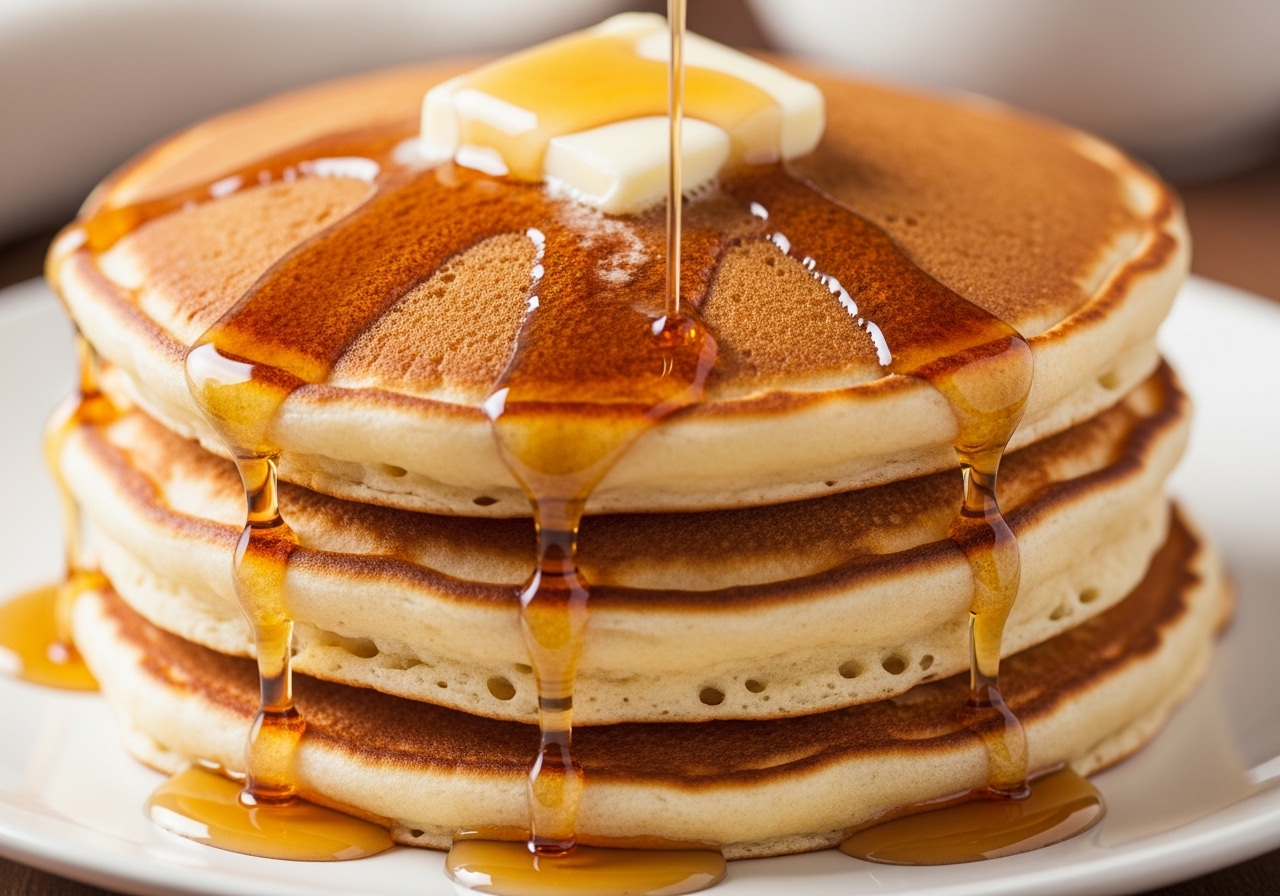
8. Serve hot. Stack the pancakes on plates, top with a generous pat of butter, and drizzle with real maple syrup. Serve immediately while they are still warm and fluffy.
Tips for Success
- Do not overmix the batter. This is the cardinal rule of pancake-making. Lumpy batter makes fluffy pancakes; smooth batter makes tough ones. Stir just until the dry ingredients are barely moistened.
- Let the batter rest for 5-10 minutes before cooking. This allows the flour to hydrate and the leavening to start working, resulting in even fluffier pancakes.
- Use medium heat, not high. Too much heat burns the outside before the inside is cooked. Medium heat gives you a golden exterior and a fully cooked, fluffy interior.
- Do not press down on the pancakes after flipping. This squeezes out the air bubbles you worked so hard to create and compresses the pancake flat.
- Cook only 2-3 pancakes at a time. Overcrowding the pan drops the temperature and makes it harder to flip them at the right moment.
Variations
Blueberry lemon pancakes: Double the lemon zest to 2 lemons and add 1 tablespoon of fresh lemon juice to the wet ingredients for a brighter, more citrus-forward pancake.
Whole wheat blueberry pancakes: Replace half the all-purpose flour with whole wheat flour for a nuttier, more fiber-rich pancake. The texture will be slightly denser but still delicious.
Blueberry banana pancakes: Fold in one mashed ripe banana along with the blueberries. The banana adds natural sweetness and moisture. For another banana-forward recipe, try our Banana Bread.
Chocolate blueberry pancakes: Add 1/3 cup of cocoa powder to the dry ingredients and fold in 1/2 cup of chocolate chips along with the blueberries. The chocolate and blueberry combination is surprisingly excellent.
My Kitchen Notes
The most important pancake lesson I ever learned was patience. Let the pan heat properly, let the batter rest, and do not flip too early. The bubbles on the surface are your signal — when they form across the entire pancake and the edges look set, it is time. If you flip too soon, the uncooked batter on top will splatter and you will lose the height you are after.
I also keep a spray bottle of water nearby when cooking pancakes. If a spot on the pan gets too hot and the butter starts to brown too quickly, a quick spritz cools it down without affecting the other pancakes.
For the fluffiest result, I sometimes separate the eggs. Beat the yolks into the wet ingredients, then beat the whites to soft peaks and fold them into the batter at the very end. This adds extra air and makes the pancakes almost soufflé-like. It is an extra step, but for a special occasion, it is worth it.
Common Mistakes to Avoid
- Overmixing the batter until it is completely smooth, which develops gluten and makes the pancakes tough and flat instead of fluffy.
- Cooking on heat that is too high, which burns the exterior before the interior is fully cooked, leaving you with a raw center.
- Flipping the pancakes too early before bubbles have formed on the surface and the edges have set, causing the batter to splatter and lose its lift.
- Using cold buttermilk straight from the refrigerator, which can cause the melted butter to solidify into lumps and create an uneven batter.
- Pressing down on the pancakes with the spatula after flipping, which deflates the air bubbles and compresses the pancake into a dense disc.
Storage and Meal Prep Tips
Cooked pancakes cool and stack beautifully in the refrigerator for up to 3 days. Place a sheet of parchment paper between each pancake to prevent sticking, then store in an airtight container. Reheat in the toaster, oven at 350°F for 5 minutes, or microwave for 20-30 seconds.
For freezing, arrange cooled pancakes in a single layer on a baking sheet and freeze until solid, about 2 hours. Transfer to a freezer bag with parchment between layers. They keep for up to 2 months. Reheat from frozen in the toaster or oven — the microwave works but makes them slightly chewy.
For meal prep, you can make the dry ingredient mix ahead of time and store it in a jar. When ready to cook, just add the wet ingredients and blueberries. This cuts your morning prep time in half and means you can have fresh pancakes on a weekday.
Frequently Asked Questions
Why are my pancakes flat and not fluffy?
The most common cause is overmixing the batter. When you stir pancake batter too much, the gluten in the flour develops and creates a tough, elastic structure that cannot rise. Mix until just combined with visible lumps remaining. The second most common cause is old or expired baking powder and baking soda. Test your baking powder by adding a teaspoon to hot water — it should bubble vigorously. Test baking soda by adding it to vinegar.
Can I use frozen blueberries instead of fresh?
Yes. Use frozen blueberries directly from the freezer without thawing them. Thawed berries release juice that turns the batter purple and makes it watery. Add them to the batter frozen and fold gently. The cold berries may cause the batter to thicken slightly, which is fine. Cooking time may increase by 30 seconds per side.
How do I keep pancakes warm while cooking the rest?
Place cooked pancakes on a baking sheet in a single layer and keep them in a 200°F oven while you finish the batch. This keeps them warm and allows the exterior to crisp up slightly without drying out. Do not stack them until they are completely cool if you plan to refrigerate or freeze them.
Can I make the batter the night before?
Yes, with a caveat. Mix the dry and wet ingredients separately the night before and store them in the refrigerator. Combine them in the morning and fold in the blueberries just before cooking. Pre-mixed batter loses some of its leavening power overnight, so the pancakes will not be quite as fluffy as freshly mixed batter.
What is the difference between buttermilk and regular milk in this recipe?
Buttermilk is thicker, tangier, and more acidic than regular milk. The acidity reacts with baking soda to create carbon dioxide, which is what makes the pancakes rise and become fluffy. Regular milk does not have the same acidity, so using it instead of buttermilk will result in denser, flatter pancakes. If you do not have buttermilk, add 2 tablespoons of lemon juice or vinegar to 2 cups of regular milk and let it sit for 5 minutes as a substitute.

About the Author
Makutu Bright
Software engineer, founder of Cracipes, and passionate home cook based in Kumasi, Ghana. BSc from KNUST, trained at AltSchool Africa. Combines food science research with real-world cooking experience to create reliable, well-tested recipes.
View All Recipes & Full Bio
Submission Received!
Your review is in the kitchen being moderated.