Rustic Slow-Cooker Beef Chili
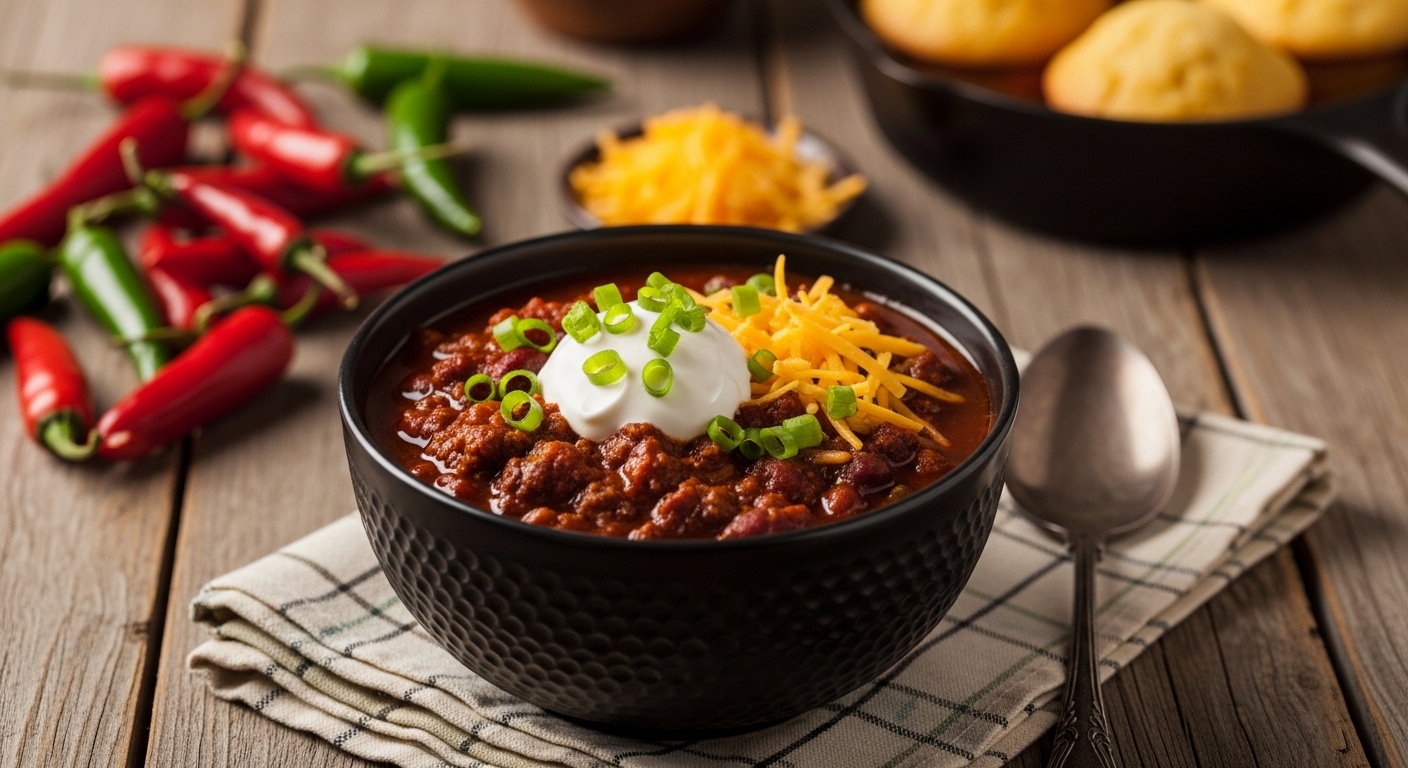
There are few topics in American cooking more passionately debated than chili. Beans or no beans? Ground beef or chunks? Tomatoes or no tomatoes? Every region, every family, every backyard cook has a deeply held opinion about what constitutes “real” chili, and they’ll defend it with the kind of fervor normally reserved for discussions about politics or religion. Chili cook-offs have seen grown adults stop speaking to each other over ingredient choices.
This recipe falls squarely into the “Texas-adjacent but not strictly traditional” camp. It uses chunks of beef rather than ground meat—because the slow cooker turns those cubes impossibly tender, almost like a braised short rib—combined with a rich, complex chili paste made from real dried peppers. It also includes beans, which immediately disqualifies it in certain purist circles. But beans are included because they add texture, fiber, and substance, and because this is a home cook’s chili, not a competition entry. It’s meant to be deeply satisfying, richly flavored, and the kind of thing that makes your house smell incredible for hours.
The Case for Real Dried Chilies
If there’s one thing that will elevate your chili from good to genuinely outstanding, it’s using real dried chilies instead of relying entirely on commercial chili powder. Commercial chili powder is a blend of ground dried chilies, cumin, oregano, garlic powder, and sometimes other additives—and the quality varies wildly between brands. Dried whole chilies give you control over the flavor profile and produce a much more complex, nuanced heat.
Ancho chilies are dried poblanos—they’re mild, fruity, and slightly sweet with a deep, raisin-like complexity. They provide the backbone of the chili’s flavor without much heat. Guajillo chilies are moderately hot with a bright, tangy, slightly berry-like flavor that adds vibrancy to the mix. Together, these two varieties create a complex, layered heat that’s infinitely more interesting than the one-dimensional burn of cayenne alone.
To prepare the dried chilies, remove the stems and seeds, then toast them in a dry skillet over medium heat for about thirty seconds per side until they become pliable and fragrant. Immediately transfer them to a bowl and cover with boiling water. Let them soak for about twenty minutes until completely softened, then blend them with a few tablespoons of the soaking liquid into a smooth paste. This paste is the secret weapon of your chili.
The Slow Cooker Method
-
Brown the beef: This step happens on the stovetop before anything goes into the slow cooker, and it’s absolutely worth the extra dish. Heat the vegetable oil in a large Dutch oven or heavy skillet over high heat. Season the beef cubes generously with salt and pepper, and brown them in batches until deeply caramelized on all sides—about eight minutes per batch. Don’t crowd the pieces; they need space to sear properly, not steam. Transfer the browned meat to the slow cooker insert.
-
Sauté the aromatics: In the same pot, reduce the heat to medium and add the diced onion and bell pepper. Cook for about five minutes until softened. Add the garlic and cook for one minute. Stir in the tomato paste and cook for another minute until it darkens slightly—this caramelizes the paste and deepens its flavor. Add the chili powder, cumin, smoked paprika, oregano, and cayenne, stirring to coat the vegetables in the spices. Cook for thirty seconds until incredibly fragrant.
-
Deglaze and transfer: Pour the crushed and diced tomatoes into the pot, scraping up every last bit of browned fond from the bottom. The fond—those dark, caramelized bits stuck to the pan—is pure concentrated flavor, and dissolving it into the tomato liquid ensures none of it goes to waste. Transfer this mixture to the slow cooker with the beef.
-
Add the chili paste: Stir the blended dried chili paste, brown sugar, and beans into the slow cooker. The brown sugar doesn’t make the chili sweet—it balances the acidity of the tomatoes and rounds out the heat from the chilies. Give everything a good stir to combine.
-
Slow cook: Cover and cook on low for seven to eight hours or on high for four to five hours. The long, gentle heat breaks down the connective tissue in the beef chuck, converting the collagen into gelatin, which gives the chili a rich, silky body. By the time it’s done, the beef should be falling-apart tender and the sauce should be thick, glossy, and deeply colored.
-
Final adjustments: In the last thirty minutes of cooking, taste the chili and make your final seasoning adjustments. It almost always needs more salt than you think, and often benefits from a squeeze of fresh lime juice and a touch more cumin. If it’s too thick, add a splash of beef stock. If it’s too thin, remove the lid and let it cook uncovered on high for the last thirty minutes.
Tips for Competition-Worthy Chili
- Toast your spices: Before adding the commercial chili powder and cumin, toast them in a dry pan for thirty seconds. This blooms the essential oils and dramatically intensifies their flavor.
- Chocolate secret: A small square of dark chocolate (at least seventy percent cacao) stirred into the chili in the last thirty minutes adds an incredible depth and richness without any perceptible chocolate flavor. It’s a trick borrowed from Mexican mole sauce.
- Beer addition: Half a cup of dark beer (stout or porter) added with the tomatoes provides malty depth and complexity. The alcohol cooks off completely during the long slow cook.
- Let it sit: Like most stews and braises, chili tastes significantly better the next day after the flavors have had time to meld and deepen overnight in the refrigerator. Make it the day before you plan to serve it.
Serving and Toppings
Chili is a dish that demands toppings. Set up a toppings bar and let everyone customize their bowl: sharp cheddar cheese (shredded, so it melts into the hot chili), a dollop of cold sour cream, diced red onion for crunch and sharpness, fresh cilantro, sliced jalapeños for those who want extra heat, and a squeeze of lime.
Warm cornbread is the definitive side dish—its sweet, crumbly texture is the perfect complement to the rich, spicy chili. Alternatively, serve the chili over rice, alongside corn chips for scooping, or even baked into baked potatoes. For a crowd, this recipe doubles easily and freezes perfectly for up to three months. If you love slow-cooked comfort food, you’ll also enjoy our Classic French Onion Soup for another deeply flavorful, hands-off meal.
My Kitchen Notes
I’ve been making slow-cooker chili for over a decade, and the single biggest game-changer was learning to use real dried chilies instead of relying solely on chili powder. The first time I toasted an ancho and a guajillo and blended them into a paste, the difference was night and day. The chili developed a fruity, complex warmth that commercial powder simply can’t replicate. It tastes like something you’d get at a serious chili cook-off, not something from a jar.
Another lesson I learned the hard way: brown the beef first. I once skipped that step, thinking the slow cooker would develop enough flavor on its own. The result was edible but flat—no depth, no richness, no caramelized fond. That extra fifteen minutes of searing creates the foundation of the entire dish. It’s the difference between good chili and exceptional chili.
I also discovered that a square of dark chocolate stirred in during the last thirty minutes is a genuine secret weapon. It doesn’t make the chili taste like chocolate—it rounds out the acidity of the tomatoes and deepens the chili flavor in a way that’s hard to describe but impossible to miss once you’ve tried it. I picked up this trick from Mexican mole sauce traditions, and it’s become non-negotiable in my recipe.
Common Mistakes to Avoid
- Skipping the browning step: Browned beef creates fond and caramelized flavor that the slow cooker alone cannot develop. Always sear the beef first—it’s worth the extra dish.
- Using ground beef instead of chuck: Ground beef becomes mushy and lacks the satisfying, fall-apart texture that slow-cooked chunks provide. Beef chuck has the marbling and connective tissue that breaks down beautifully over hours of gentle heat.
- Boiling the chili: Keep the slow cooker on low or just barely simmering on high. A vigorous boil breaks down the meat too aggressively and can cause the sauce to become greasy.
- Not adjusting seasoning at the end: Chili always needs more salt than you think, and a final squeeze of lime juice brightens everything. Taste and adjust before serving.
- Adding beans too early: If you add canned beans at the beginning, they’ll turn to mush. Stir them in during the last two hours of cooking for the best texture.
Storage & Meal Prep Tips
Beef chili is one of the best meal prep recipes available. Store it in airtight containers in the refrigerator for up to five days. The flavors continue to develop and deepen on day two and three, making leftovers arguably better than the fresh batch.
For freezing, let the chili cool completely before transferring to freezer-safe containers or heavy-duty zip-lock bags. It freezes beautifully for up to three months. Thaw overnight in the refrigerator and reheat gently on the stovetop.
Portion the chili into individual containers for easy grab-and-go lunches throughout the week. It pairs equally well with rice, cornbread, or crackers, so mix up your sides to keep things interesting.
For a quick weeknight dinner, prep all your vegetables and spice paste the night before. In the morning, brown the beef, combine everything in the slow cooker, and come home to a house that smells incredible.
Frequently Asked Questions
Can I use ground beef instead of chuck roast? You can, but the texture will be quite different. Ground beef cooks faster and becomes softer, lacking the satisfying fall-apart chunks that define this recipe. If using ground beef, brown it well and reduce the cooking time to four to five hours on low.
How do I make the chili less spicy? Reduce the cayenne pepper or omit it entirely. The ancho and guajillo chilies provide mostly flavor with mild heat. You can also add more brown sugar to balance the spiciness, or serve with a generous dollop of sour cream.
Can I make this in a Dutch oven instead of a slow cooker? Yes. Brown the beef and sauté the aromatics as directed, then cover and cook in a 325°F oven for three to four hours, or simmer on the stovetop on very low heat for the same amount of time.
Why is my chili too thin? Slow cookers trap moisture, so the chili may need thickening. Remove the lid during the last thirty minutes of cooking and increase the heat to high. Alternatively, mash some of the beans against the side of the pot to thicken the sauce naturally.
Can I add other vegetables? Absolutely. Diced zucchini, corn, or sweet potato are excellent additions. Add harder vegetables like sweet potato early in the cooking process, and softer ones like zucchini or corn during the last hour to prevent them from turning mushy.

About the Author
Makutu Bright
Software engineer, founder of Cracipes, and passionate home cook based in Kumasi, Ghana. BSc from KNUST, trained at AltSchool Africa. Combines food science research with real-world cooking experience to create reliable, well-tested recipes.
View All Recipes & Full Bio
Submission Received!
Your review is in the kitchen being moderated.