Classic French Onion Soup with Gruyère Croutons
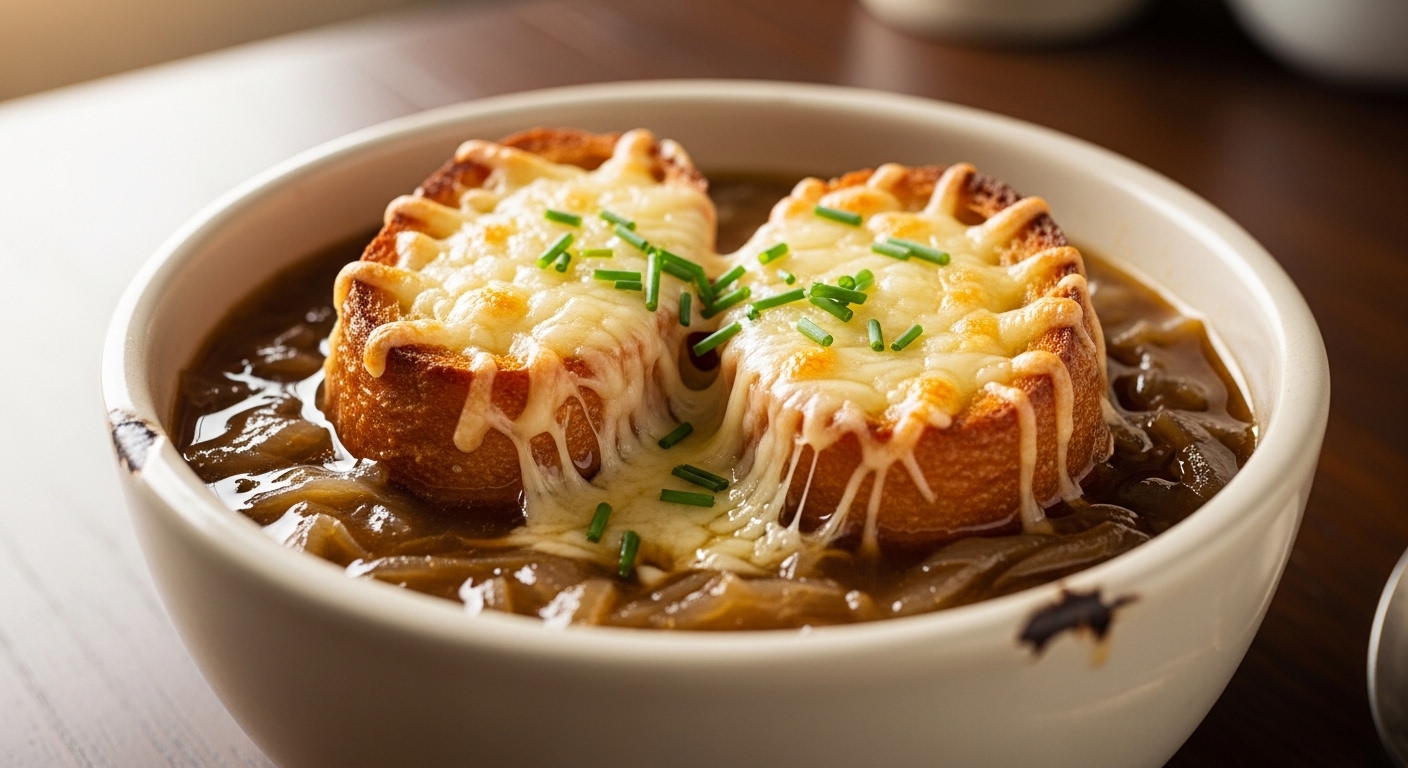
Good French onion soup is an exercise in patience. The entire dish pivots on one thing: how well you caramelize the onions. There are no shortcuts here, no hacks, no ways to speed it up without compromising the result. The onions need a solid forty-five minutes to an hour of slow, attentive cooking to transform from sharp, pungent slices into sweet, deeply bronzed, jammy strands that dissolve into the broth and give it that unmistakable richness. If you’ve ever had a version that tasted watery or bland, it’s almost certainly because the onions weren’t caramelized long enough. If you enjoy deeply flavored comfort food, you’ll also appreciate our Classic Beef Stroganoff, which features its own rich, savory sauce built with patience and technique.
A Brief History
French onion soup, or “soupe à l’oignon gratinée,” has humble origins. Onion-based soups have been eaten in France since at least the Middle Ages, when onions were one of the cheapest and most widely available vegetables. The dish we know today—with its rich beef broth and signature cap of melted cheese—was refined in the Parisian bistros of the eighteenth and nineteenth centuries, where it became a legendary late-night meal for workers coming off long shifts at the old Les Halles market.
There’s a popular legend that the soup was invented by King Louis XV, who found nothing in his hunting lodge late one night but onions, butter, and champagne. It’s almost certainly not true, but it speaks to the soup’s appeal—that something so extraordinary can come from something so ordinary.
The Art of Caramelizing Onions
The most common mistake people make with onion soup is rushing the caramelization. Some recipes online claim you can caramelize onions in ten or fifteen minutes, but you can’t—at least not properly. What you get in fifteen minutes is softened onions that might have some light golden color, but they won’t have the deep mahogany color, the jammy texture, or the concentrated sweetness that defines great onion soup.
Yellow onions are the best choice here. They have a good balance of sugar and sulfur compounds, so they start out sharp and pungent but mellow into something deeply sweet as they cook. Sweet onions like Vidalias can work, but they contain more water and sugar, which actually makes them harder to caramelize properly because they tend to steam rather than brown and can turn mushy.
Slice the onions about a quarter-inch thick. Try to keep the slices relatively uniform so they cook at the same rate. Some will break apart into rings, some will stay as half-moons—that’s totally fine.
Making the Soup
-
Start the onions: Melt the butter with the olive oil in a large, heavy-bottomed pot (a Dutch oven is ideal) over medium heat. The combination of butter and oil gives you the flavor of butter with a slightly higher smoke point from the oil, so the butter doesn’t burn during the long cooking time. Add all the sliced onions—it’ll look like an absurd amount, but they’ll cook down to a fraction of their original volume. Stir to coat them in the fat, then add a generous pinch of salt. The salt draws moisture out of the onions, which helps jumpstart the softening process.
-
The long caramelize: Cook the onions, stirring every five to eight minutes, for about forty-five minutes to an hour. For the first twenty minutes, the onions will release a ton of liquid and basically steam in their own juices. Don’t increase the heat—you want this gradual process. Around the thirty-minute mark, the liquid will have mostly evaporated and the onions will start to stick to the bottom of the pot and develop golden-brown patches. This is exactly what you want.
When they stick, add a splash of water—about two tablespoons—and scrape up the browned bits with a wooden spoon. Those browned bits dissolved back into the onions deepen the flavor enormously. You’ll repeat this process of sticking, adding water, and scraping several times. Sprinkle the sugar over the onions around the thirty-minute mark to help the caramelization along. By the time you’re done, the onions should be a deep, rich amber color and should taste intensely sweet with almost no sharpness remaining.
-
Deglaze and build the broth: Sprinkle the flour over the onions and stir for about one minute to cook off the raw taste. Pour in the wine and scrape up every last bit of fond from the bottom of the pot—this is the final extraction of flavor. Let the wine cook off for about two minutes until it’s mostly evaporated, then add the beef stock, thyme, and bay leaf. Bring everything to a gentle simmer and cook uncovered for twenty to thirty minutes to let the flavors meld together.
-
Prepare the croutons: While the soup simmers, slice the baguette and arrange the slices on a baking sheet. Toast them in the oven at 375°F (190°C) for about eight to ten minutes until they’re dried out and golden. You want them sturdy enough that they won’t immediately dissolve when they hit the soup—they need to support a heavy layer of melted cheese.
-
Assemble and broil: Ladle the hot soup into oven-safe crocks or ramekins. Float two slices of toasted baguette on top of each serving, then pile the grated Gruyère cheese generously over the bread, letting it overlap the edges of the bowl slightly. Place the crocks on a baking sheet and broil on the top rack for three to five minutes until the cheese is bubbling, golden, and slightly charred in spots. Watch it like a hawk under the broiler—it goes from perfect to blackened in seconds.
Choosing the Right Cheese
Gruyère is the classic choice, and for good reason. It melts into long, stretchy strands, it browns beautifully under the broiler, and it has a complex, nutty flavor that complements the sweet onions without overpowering them. Comté is another excellent option from the same Swiss-French cheese family. In a pinch, you can use Swiss or Emmentaler, but they’re milder and won’t give you quite the same depth of flavor.
Whatever you do, grate the cheese yourself from a block. Pre-shredded cheese is coated in anti-caking agents (usually cellulose or potato starch) that prevent it from melting smoothly. You’ll end up with a grainy, clumpy cap instead of that gorgeous, stretchy, golden blanket you’re going for.
A Few Tips
- Stock quality matters: Since the broth is such a prominent element, use the best stock you can find. Homemade beef stock is ideal. If you’re using store-bought, look for stock rather than broth—it tends to have more body and flavor. Adding a tablespoon of soy sauce or Worcestershire sauce can boost the umami depth if your stock is lacking.
- Wine selection: A dry white wine like Sauvignon Blanc or a dry sherry adds a nice acidic brightness that balances the sweetness of the onions. Red wine works too but will make the broth darker and slightly more robust in flavor. Avoid sweet wines—the soup needs acidity, not more sugar.
- Serving immediately: This soup is best served immediately after broiling while the cheese is still stretchy and bubbling. It doesn’t reheat well with the bread and cheese, so only assemble what you plan to eat right away. The broth itself keeps beautifully in the fridge for three to four days or the freezer for three months.
My Kitchen Notes
After making this soup dozens of times, I’ve learned that the biggest game-changer is simply not rushing the onions. I set a timer for 45 minutes and resist the temptation to crank up the heat. I’ve also found that a combination of butter and olive oil works better than butter alone—the oil raises the smoke point and prevents the butter from burning during the long cook. One thing that surprised me was how much of a difference a splash of soy sauce makes in the broth. It adds a deep umami backbone that mimics the complexity of homemade stock even when you’re using store-bought. I always taste the onions at the 30-minute mark and again at 45 minutes—the difference between them is remarkable. And please, do yourself a favor and grate your own Gruyère. Pre-shredded cheese simply won’t give you that gorgeous, stretchy cheese pull that makes this soup so iconic.
Common Mistakes to Avoid
- Rushing the caramelization. Onions need 45-60 minutes of slow cooking to develop their deep sweetness and color. Anything less will give you a bland, pale soup.
- Using the wrong onions. Sweet onions like Vidalias contain too much water and sugar, making them difficult to caramelize properly. Yellow onions are the best choice for their balance of flavor.
- Overcrowding the pot. Use a large, heavy-bottomed pot so the onions have room to cook evenly. A crowded pot will steam the onions instead of browning them.
- Using pre-shredded cheese. Anti-caking agents in pre-shredded cheese prevent it from melting smoothly, resulting in a grainy, clumpy cap instead of a stretchy blanket.
- Assembling too far in advance. The bread and cheese should only be broiled right before serving. Assembling too early makes the bread soggy and the cheese rubbery.
Storage & Meal Prep Tips
The soup base (without bread and cheese) can be made up to 4 days ahead and stored in the refrigerator. Reheat it on the stovetop over medium heat until hot. The caramelized onions can also be made in advance and frozen for up to 3 months—this is a great way to prep for future meals. When ready to serve, ladle the hot broth into oven-safe crocks, add toasted baguette slices, top with freshly grated Gruyère, and broil until bubbly. Never store the assembled soup with bread and cheese, as the bread will become mushy. If you have leftover broth without toppings, it freezes beautifully and makes an excellent quick meal when paired with fresh croutons and cheese.
Frequently Asked Questions
Can I make French onion soup without wine?
Absolutely. If you prefer not to use wine, you can substitute with additional beef broth plus a tablespoon of balsamic vinegar or a squeeze of lemon juice. The acid is what matters—it balances the sweetness of the caramelized onions and adds brightness to the broth. Sherry also works as a wonderful alternative.
What’s the best bread for the croutons?
A day-old French baguette is ideal. The bread should be sturdy enough to support a heavy layer of melted cheese without immediately dissolving in the broth. Slice it about one inch thick and toast it in the oven until it’s dried out and golden. Sourdough bread is another excellent option that adds a subtle tanginess.
Can I use a different cheese?
Gruyère is the classic and most flavorful choice, but Comté is an excellent substitute from the same cheese family. Swiss or Emmentaler can work in a pinch, though they’re milder. The key is using a good melting cheese that browns well under the broiler.
How do I prevent the soup from being too salty?
Taste your broth before adding extra salt. Beef stock can vary widely in sodium content depending on the brand. Season gradually and remember that the Gruyère cheese also adds saltiness. You can always adjust at the end.

About the Author
Makutu Bright
Software engineer, founder of Cracipes, and passionate home cook based in Kumasi, Ghana. BSc from KNUST, trained at AltSchool Africa. Combines food science research with real-world cooking experience to create reliable, well-tested recipes.
View All Recipes & Full Bio
Submission Received!
Your review is in the kitchen being moderated.