Beginner's Guide to Homemade Sourdough Bread
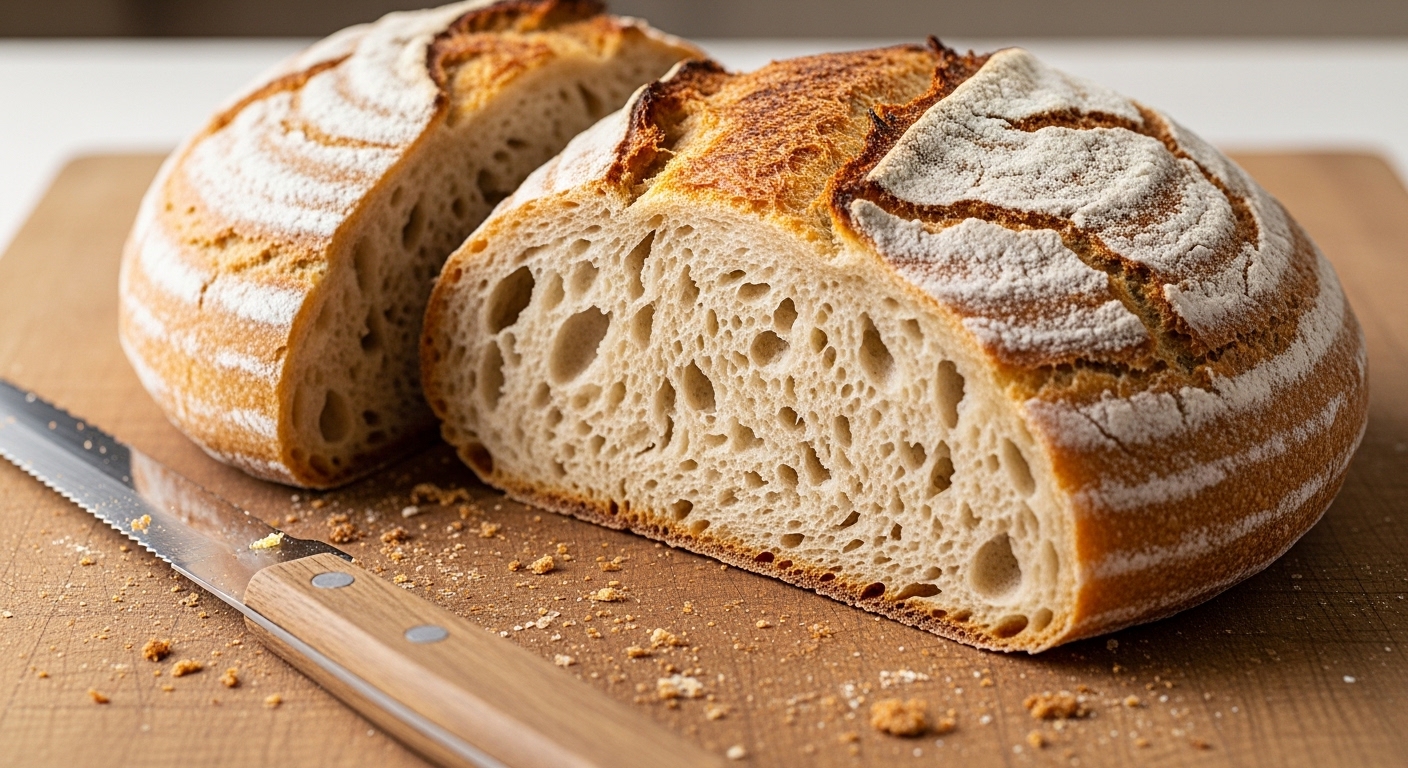
Sourdough bread is one of those things that seems intimidating until you actually start doing it, and then it becomes second nature. The learning curve is real—your first loaf probably won’t look like the ones on Instagram, and that’s completely fine. But once you understand what’s actually happening with the dough at each stage, you’ll start producing bread that’s better than anything you can buy at most bakeries. The crackling crust, the tangy crumb, the way it fills your entire kitchen with the most incredible smell—it’s worth every bit of the effort.
Understanding Your Sourdough Starter
Before you even think about baking, you need an active, healthy sourdough starter. A starter is a living culture of wild yeast and lactic acid bacteria that you maintain by regularly feeding it flour and water. The wild yeast provides the leavening (the rise), and the bacteria produce lactic and acetic acids, which give sourdough its characteristic tangy flavor.
If you don’t have a starter yet, making one from scratch takes about seven to ten days. Combine equal parts flour and water by weight in a jar, leave it loosely covered at room temperature, and feed it daily by discarding half and adding fresh flour and water. By the end of the first week, it should be reliably doubling in size within four to six hours of feeding—that’s when it’s ready to bake with.
The float test is a simple way to check if your starter is ready: drop a small spoonful into a glass of water. If it floats, the starter has produced enough gas and is active enough to leaven bread. If it sinks, give it another feeding and try again in a few hours.
The Importance of Hydration
This recipe uses a hydration of seventy percent, which means the water weight is seventy percent of the flour weight. That’s a good middle ground for beginners. Higher hydration doughs (seventy-five to eighty-five percent) produce bread with a more open, irregular crumb and a thinner crust, but they’re significantly harder to handle because they’re wet and sticky. Lower hydration doughs are easier to shape but tend to produce a tighter crumb.
Water temperature matters more than most beginners realize. The temperature of your water directly affects the temperature of your dough, which in turn affects how fast the fermentation happens. I aim for a final dough temperature of about 78°F (25°C). In a warm kitchen, use cooler water. In a cold kitchen, use warmer water. This is the kind of small adjustment that separates consistent results from unpredictable ones.
The Process, Step by Step
-
Autolyse: Combine the flour and water in a large bowl and mix until no dry flour remains. Cover the bowl and let it rest for thirty to sixty minutes. During this rest, the flour fully absorbs the water and the gluten proteins begin to organize themselves into a network without any kneading. When you come back to the dough after the autolyse, you’ll notice it’s already smoother and more extensible. This step makes everything that follows easier.
-
Add the starter and salt: After the autolyse, add the sourdough starter and salt to the dough. The easiest way to incorporate them is using the “pinch and fold” method—literally pinch the dough with your thumb and forefinger, cutting through it, then fold it over itself. Rotate the bowl and repeat. Do this for about three to four minutes until the starter and salt are fully incorporated and the dough feels cohesive.
-
Bulk fermentation with stretch and folds: This is where the magic happens. Over the next four to six hours (depending on your kitchen temperature), you’ll perform a series of stretch and folds every thirty minutes for the first two hours, then leave the dough undisturbed for the remainder. To do a stretch and fold, wet your hands, grab one side of the dough, stretch it up as far as it’ll go without tearing, and fold it over to the opposite side. Rotate the bowl ninety degrees and repeat. Do this four times to complete one set.
These stretch and folds develop gluten strength, incorporate air, and help equalize the dough temperature. After four to six sets, you’ll notice the dough has transformed from a shaggy, slack mass into something smooth, pillowy, and full of air. By the end of bulk fermentation, the dough should have increased in volume by about fifty to seventy-five percent—not double, as you might expect from commercial yeast recipes. It should look puffy, feel airy, and jiggle when you shake the bowl.
-
Pre-shape: Gently turn the dough out onto a lightly floured surface. Using a bench scraper, fold the edges toward the center to create a rough round shape, then flip it over so the seam side is down. Let it rest for twenty to thirty minutes. This pre-shape gives the dough structure while allowing the gluten to relax before the final shape.
-
Final shape: After the bench rest, lightly flour the top of the dough and flip it over. Pull the bottom edge up to the center, fold the sides in, then roll it toward you to create a tight round (or oval for a batard shape). The surface tension on the bottom of the loaf is important—it’s what helps the bread hold its shape as it rises and bakes. Place the shaped dough seam-side up into a well-floured proofing basket (banneton). Rice flour works best for dusting the basket because it doesn’t absorb moisture the way wheat flour does, so the dough won’t stick.
-
Cold retard: Cover the basket with a damp towel or plastic wrap and place it in the refrigerator for twelve to sixteen hours (overnight). The cold slows fermentation dramatically, which accomplishes two things: it develops a deeper, more complex, tangier flavor, and it makes the dough much easier to score and handle before baking because cold dough holds its shape better.
-
Bake: Preheat your oven to 500°F (260°C) with a Dutch oven inside for at least forty-five minutes. The preheated Dutch oven acts as a mini steam oven—when you drop the cold dough inside and cover it with the lid, the moisture escaping from the dough creates steam, which keeps the crust soft long enough for the bread to fully expand (called “oven spring”). Bake covered for twenty minutes, then remove the lid, reduce the temperature to 450°F (230°C), and bake for another twenty to twenty-five minutes until the crust is deeply golden brown. The internal temperature should read about 205-210°F (96-99°C) when it’s done.
-
Cool completely: This is the hardest part—you have to let the bread cool for at least one hour on a wire rack before cutting into it. The interior is still cooking and setting from residual heat during this time. Cutting too early results in a gummy, underdone interior.
Troubleshooting Common Issues
- Dense crumb: Usually caused by underfermentation during bulk fermentation. Let the dough go longer, or use a warmer spot in your kitchen.
- Too sour: Reduce the cold retard time, or use a higher ratio of starter to flour. Warmer fermentation also favors milder lactic acid over sharper acetic acid.
- No oven spring: Your dough may be overproofed, or your scoring isn’t deep enough. The score should be about a quarter-inch deep at a thirty-degree angle.
- Sticking to the banneton: Use more rice flour next time, and make sure the surface of the shaped dough isn’t too wet before placing it in the basket.
Why It’s Worth the Effort
Once you’ve baked your first successful loaf—when you hear that hollow knock on the bottom, when you see the ear on the score pull back beautifully, when you slice into it and see those open, glossy pockets in the crumb—you’ll understand why people get obsessed with this. Good sourdough bread is alive in a way that commercial bread simply isn’t. Every loaf is slightly different because the fermentation is influenced by temperature, humidity, and the unique microbial ecosystem in your starter. It connects you to a tradition of breadmaking that goes back thousands of years. If you’re interested in other baking projects, our Banana Bread and Fluffy Buttermilk Pancakes are excellent next steps for building your baking skills.
My Kitchen Notes
The single most important thing I’ve learned about sourdough is that temperature control matters more than any other variable. I now keep a cheap instant-read thermometer next to my flour bin. When I know my water temperature, I can predict with reasonable accuracy how long bulk fermentation will take. In a 78°F kitchen, bulk fermentation takes about five hours. In a 65°F winter kitchen, it can take seven or eight. Adjusting water temperature to target a consistent final dough temperature is the simplest way to get predictable results.
The autolyse step is one I never skip. I used to think it was optional—one more hour of waiting—but the difference in extensibility after autolyse versus without is dramatic. The dough stretches without tearing, which makes the stretch and folds more effective and the final shaping much easier.
One mistake I made for months was under-shaping the final loaf. I wasn’t creating enough surface tension on the bottom of the boule, and the dough would spread sideways in the oven instead of rising upward. The fix is simple: after folding the dough into its final shape, gently drag it across the unfloured surface of your countertop, letting the friction between the dough and the counter tighten the outer skin. You should feel the dough pulling taut underneath.
Common Mistakes to Avoid
- Underfermenting during bulk fermentation: This is the most common beginner mistake. If the dough hasn’t increased in volume by at least fifty percent and doesn’t look puffy and jiggly, it needs more time. Underfermented bread will be dense regardless of how well you shape or bake it.
- Cutting into the bread too early: The interior is still cooking and setting from residual heat for at least an hour after pulling it from the oven. Slicing too soon releases steam and results in a gummy, gummy crumb that disappoints after all your effort.
- Using inactive or weak starter: If your starter doesn’t reliably double within four to six hours of feeding, it won’t have enough power to leaven bread properly. Refresh it with two or three daily feedings before baking.
- Not preheating the Dutch oven long enough: The vessel needs a full forty-five minutes to an hour at 500°F to store enough thermal energy for proper oven spring. Putting dough into a cold or partially heated Dutch oven defeats the purpose.
- Skipping the scoring step: Without a proper score, the bread will burst open at its weakest point during oven spring, creating an irregular shape and potentially a dense seam. Score with a sharp blade at a thirty-degree angle about a quarter-inch deep.
Storage & Meal Prep Tips
Sourdough bread keeps at room temperature in a paper bag or linen bread bag for up to three days. The crust will gradually soften as moisture migrates from the interior, but the flavor actually improves on the second day. For longer storage, slice the bread and freeze it in zip-top bags with parchment paper between slices. Frozen sourdough keeps for up to three months and toasts beautifully directly from the freezer.
Never refrigerate sourdough bread. The refrigerator accelerates staling by promoting starch retrogradation faster than room temperature storage. If you won’t eat the whole loaf within a few days, freeze half immediately after it cools.
For meal prep, I slice the entire loaf when it’s fully cooled, freeze it in portions, and pull out slices as needed for morning toast or sandwiches. The frozen slices toast in about three minutes and taste nearly as good as fresh-baked.
The sourdough starter itself is the ultimate meal prep tool. Feed it, bake with it, and keep it going indefinitely. A well-maintained starter can last decades. The discard from feedings can be used in pancakes, crackers, pizza dough, and quick breads—nothing goes to waste.
Frequently Asked Questions
How do I know when bulk fermentation is done?
Look for these signs: the dough has increased in volume by fifty to seventy-five percent (not doubled), it looks puffy and airy, you can see bubbles on the surface and along the sides of the bowl, and it jiggles when you shake the bowl. The dough should feel lighter and more alive than when you started. An overfermented dough will look deflated, extremely bubbly, and may have a strong vinegar smell.
Why is my sourdough so sour?
Excessive sourness comes from too much acetic acid, which is produced during long, cold fermentation or when the starter is slightly past its peak. You can reduce tang by shortening the cold retard time, using a younger starter, or fermenting at a slightly warmer temperature, which favors milder lactic acid over sharp acetic acid.
Do I really need a Dutch oven?
A Dutch oven is the most reliable way to create the steam environment that sourdough needs during the first phase of baking. Without steam, the crust sets too quickly and the bread can’t fully expand. If you don’t have a Dutch oven, you can create steam by placing a pan of boiling water on the lower rack and misting the oven walls with water, but the Dutch oven method is more consistent and forgiving.
Can I speed up the process by using more starter?
You can increase the starter ratio slightly (up to about twenty percent of the flour weight) for a faster rise, but this also tends to produce a milder flavor and a less open crumb. More starter means more yeast activity upfront but less time for the bacteria to develop the complex organic acids that give sourdough its distinctive character.
Why doesn’t my bread have big holes in the crumb?
An open, irregular crumb requires sufficient hydration, proper fermentation, gentle handling during shaping, and enough steam during baking. If your bread has a tight, even crumb, you may have degassed the dough too aggressively during shaping, or the dough may be slightly underfermented. Higher hydration doughs (eighty percent and above) tend to produce more open crumbs, but they’re harder to handle.

About the Author
Makutu Bright
Software engineer, founder of Cracipes, and passionate home cook based in Kumasi, Ghana. BSc from KNUST, trained at AltSchool Africa. Combines food science research with real-world cooking experience to create reliable, well-tested recipes.
View All Recipes & Full Bio
Submission Received!
Your review is in the kitchen being moderated.